Meet the Calm, Captivating Snake That’s Winning Over Reptile Lovers Worldwide
If you’ve been searching for a snake that combines stunning looks, a docile temperament, and manageable care requirements, the Dumeril’s boa might just be exactly what you’ve been looking for. This Madagascar-native constrictor has quietly built a devoted following among reptile enthusiasts, and for very good reason. It’s not flashy or trendy it’s simply one of the most well-rounded pet snakes available today, and experienced keepers know it.
Whether you’re a seasoned reptile hobbyist or someone seriously considering their first large snake, understanding this species fully before bringing one home is essential. From Dumeril’s boa size to caring for a baby Dumeril’s boa, there’s a lot worth knowing before you commit.
What Exactly Is a Dumeril’s Boa?
The Dumeril’s boa, scientifically known as Acrantophis dumerili, is a non-venomous constrictor native to the island of Madagascar. It belongs to the family Boidae and is named in honor of French zoologist André Marie Constant Duméril, who made significant contributions to herpetology in the 19th century. In the wild, this snake inhabits dry forests and semi-arid regions, where it spends much of its time hiding under leaf litter and debris waiting to ambush prey.
What makes this species genuinely stand out is its personality. Unlike many large constrictors that remain defensive or unpredictable even after years in captivity, the Dumeril’s boa tends to be calm, slow-moving, and remarkably tolerant of human handling. That combination of beauty and temperament is exactly what draws so many people to this species.
Dumeril’s Boa Size What to Expect as It Grows
One of the first questions people ask is about Dumeril’s boa size, and it’s a fair question because size directly affects housing, feeding, and overall management. Adults typically reach between 4 and 7 feet in length, with females growing noticeably larger than males. Some exceptional females have been recorded reaching close to 8 feet, though that’s on the upper end of the spectrum.
Despite their length, Dumeril’s boas have a relatively heavy, stocky build. They’re not slender snakes they carry significant girth, especially in the mid-body. This physical presence makes them impressive to look at, but it also means their enclosure needs to be spacious and sturdy. Growth happens gradually over several years, so keepers have time to scale up their setup as the snake matures.
How Dumeril’s Boa Size Compares to Other Boas
Compared to the more commonly kept common boa (Boa constrictor), the Dumeril’s boa size is actually quite similar, though Dumeril’s tend to stay on the shorter end more consistently. They’re noticeably smaller than reticulated pythons or Burmese pythons, which makes them a more practical choice for hobbyists who want a substantial snake without the extreme size and strength demands of the largest constrictors in the world.
The Baby Dumeril’s Boa Starting Off on the Right Foot
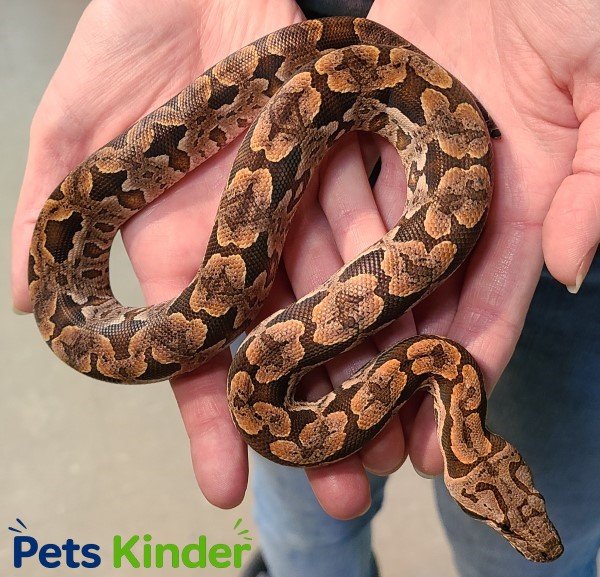
Bringing home a baby Dumeril’s boa is an exciting experience, but it does require some preparation and patience. Neonates are typically born live this species is viviparous, meaning it gives birth to live young rather than laying eggs. A baby Dumeril’s boa can measure anywhere from 12 to 18 inches at birth and already carries the striking patterning that adults are known for.
Feeding a baby Dumeril’s boa requires consistency and calm. Most neonates will readily accept appropriately sized frozen-thawed mice or rat pups, though some individuals can be initially reluctant feeders. Offering prey in a paper bag or a smaller feeding container can sometimes encourage a hesitant neonate to strike and eat confidently. Patience truly pays off here with regular, stress-free feeding sessions, most baby Dumeril’s boas establish strong feeding responses within their first few months.
Appearance and Physical Characteristics
The Dumeril’s boa is genuinely one of the most beautiful snakes in the hobby. Its base coloration is a warm tan or brown, overlaid with a complex pattern of darker brown blotches, saddles, and irregular markings that almost resemble a woven tapestry. The belly is typically cream or pale yellow, often with subtle spotting. Each individual carries a slightly unique pattern, which means no two snakes look exactly alike.
The scales have an almost matte, earthy texture that gives the snake an understated elegance. Their eyes are a deep reddish-brown, adding to their overall striking appearance. Overall, the Dumeril’s boa is a snake that draws attention without being loud about it much like the snake’s personality itself.
Diet and Nutrition
In the wild, the Dumeril’s boa primarily feeds on lizards, birds, and small mammals. In captivity, a diet of appropriately sized frozen-thawed rodents works perfectly well and keeps both the snake and the keeper safe. Feeding live prey is unnecessary and carries the risk of injury to the snake.
Juveniles should eat every 7 to 10 days, while adults can be fed every 2 to 3 weeks. The prey item should be roughly the same width as the widest part of the snake’s body. Overfeeding is a common mistake obesity in captive boas leads to serious health complications over time. Always provide fresh water in a bowl large enough for the snake to soak if it chooses, and clean that bowl regularly to prevent bacterial growth.
Housing, Care, and Environmental Needs
Adult Dumeril’s boas need a secure enclosure of at least 6 feet by 2 feet by 2 feet, though larger is always better. They are terrestrial snakes and spend very little time climbing, so horizontal space matters far more than vertical height. Provide multiple hides at least one on the warm side and one on the cool side so the snake always feels secure regardless of where it is in the thermal gradient.
Maintain a temperature gradient of 80 to 85°F on the warm side and 75 to 78°F on the cool side, with a basking spot around 88°F. Humidity should stay in the 60 to 70% range, which is easy to achieve with a cypress mulch or coconut fiber substrate that holds moisture well. Proper humidity is particularly important during shedding cycles.
Health, Common Issues, and Diseases
The Dumeril’s boa is generally a hardy species when kept correctly, but a few health issues are worth knowing. Respiratory infections can occur when temperatures drop too low or humidity fluctuates dramatically. Symptoms include wheezing, mucus around the mouth and nostrils, and open-mouth breathing all of which require prompt veterinary attention.
Mites are another concern that affects many captive snakes, including the Dumeril’s boa. Regular enclosure cleaning and careful quarantine of any new animals before introducing them to your collection go a long way toward prevention. Mouth rot, or infectious stomatitis, can develop from stress or injury and shows up as swelling and discoloration around the mouth. A qualified reptile veterinarian should evaluate any unusual symptoms quickly.
Prominent reptile educator and herpetologist Brian Barczyk, who has spent decades working with exotic reptiles, has frequently highlighted Madagascar boas as some of the most rewarding snakes a keeper can own, praising their calm nature and long-term manageability for responsible hobbyists.
Lifespan and Long-Term Commitment
The Dumeril’s boa is a long-term commitment in every sense. In captivity, a well-cared-for individual can live 20 years or more, with some documented cases exceeding 25 years. That lifespan means adopting this species is a serious decision not something to take lightly. Before bringing one home, consider whether your lifestyle, living situation, and resources can sustain that commitment over decades.
For those who are ready for it, though, the Dumeril’s boa rewards that dedication with consistent, calm behavior and a presence that never stops being impressive. It’s the kind of snake that becomes a genuine part of your life not just a novelty.
Is the Dumeril’s Boa Right for You?
If you want a large, beautiful, manageable snake with a gentle temperament and a long healthy lifespan, the Dumeril’s boa is an outstanding choice. It’s forgiving for keepers who stay consistent, stunning to observe, and deeply satisfying to work with over time. From understanding Dumeril’s boa size expectations upfront to properly raising a baby Dumeril’s boa into a thriving adult, every stage of ownership offers its own rewards.
Do your research, set up the enclosure correctly before bringing one home, and commit to the long game. The Dumeril’s boa will absolutely be worth it.