River Otter: The Playful Aquatic Hunter That’s Smarter Than You Ever Imagined

There’s something almost irresistible about a river otter. Watch one for thirty seconds spiraling through clear water, cracking open a mussel on a flat rock, or simply sliding down a muddy bank for what appears to be pure fun and you start to understand why people become genuinely obsessed with these animals. The North American river otter is one of the most charismatic, capable, and ecologically important mammals on the continent, and yet most people know surprisingly little about what makes them so extraordinary.
Physical Characteristics and River Otter Size
A Body Engineered for Water
The river otter is a masterpiece of aquatic adaptation. From nose to tail tip, adults typically measure between 3.5 and 4.5 feet in length, and river otter size varies noticeably between males and females males generally weigh between 11 and 30 pounds, while females run slightly smaller. That streamlined, torpedo-shaped body moves through water with an efficiency that looks almost mechanical. Short, powerful legs end in fully webbed feet, and the thick, tapered tail which alone accounts for roughly a third of total body length acts as a rudder during dives and tight underwater turns.
Fur That Functions Like a Wetsuit
The river otter’s coat is one of the densest in the animal kingdom, with up to 60,000 hairs per square inch in some areas of the body. This coat works in two distinct layers: a coarse outer layer that repels water on contact and a dense, fine undercoat that traps warm air against the skin. Unlike seals, river otters have no blubber layer, so their fur is their only thermal protection in cold water. They spend considerable time grooming not out of vanity, but because matted fur loses its insulating capacity and can genuinely threaten their survival in cold temperatures.
Senses Built for Hunting
River otters rely on a sophisticated combination of senses while hunting. Their eyes adjust rapidly between air and water vision, their ears and nostrils seal shut during dives, and their facial whiskers called vibrissae are exquisitely sensitive to pressure changes and water movement. Those whiskers allow them to track the path of a fleeing fish in murky, low-visibility water with startling accuracy. Consequently, a river otter doesn’t need to see its prey clearly to catch it. It simply needs to feel the disturbance the prey leaves behind.
Diet and Nutrition
What River Otters Actually Eat
River otters are opportunistic, highly skilled carnivores. Fish make up the largest portion of their diet particularly slower-moving species like suckers, catfish, and perch rather than fast swimmers like trout, which require more energy to catch. Beyond fish, they actively hunt crayfish, frogs, turtles, mussels, aquatic insects, and occasionally small mammals or birds that stray too close to the water’s edge. Their diet shifts with the seasons and with local prey availability, which is one of the key reasons they’ve managed to thrive across such a wide geographic range.
Feeding Behavior and Daily Intake
River otters are high-energy animals with a fast metabolism, and they need to eat roughly 15 to 20 percent of their body weight each day to sustain themselves. They typically hunt in short, intense bursts rather than long pursuits, consuming smaller prey items in the water immediately after capture and bringing larger items to shore to eat on a flat rock or log. This feeding behavior also serves a secondary ecological function discarded carcasses and shells contribute to nutrient cycling in riparian ecosystems, quietly supporting the food web around them.
Baby River Otter: Early Life and Development
Birth and the First Weeks
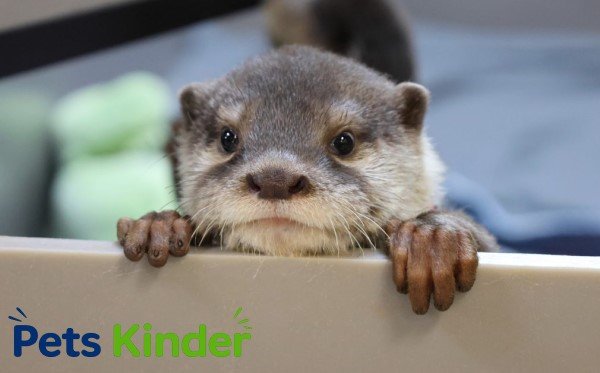
A baby river otter enters the world completely helpless. Pups are born with their eyes sealed shut, covered in dark, velvety fur, and entirely dependent on their mother for warmth, feeding, and protection. Litters typically consist of one to three pups, born in a den that the mother either digs herself or appropriates from a beaver or muskrat. For the first month of life, the baby river otter doesn’t leave the den at all the mother nurses the pups and keeps them warm while the father, if he remains involved, may occasionally bring food.
Learning to Swim and Hunt
Here’s something surprising: river otters are not born knowing how to swim. The mother must coax, push, and sometimes physically carry her pups into the water to introduce them to their aquatic environment and the pups frequently resist. Once in the water, they learn quickly, but the process takes weeks of patient instruction. By around two months of age, the pups are swimming confidently. Hunting skills develop more gradually, with the mother demonstrating techniques and allowing pups to practice on injured or slow-moving prey before they attempt independent hunting. The family typically stays together for about a year.
Lifespan and Long-Term Characteristics
How Long River Otters Live
In the wild, river otters typically live between 8 and 13 years, though individuals in particularly resource-rich, low-stress environments occasionally reach their mid-teens. In captivity, where food is consistent and predators are absent, river otters have been documented living into their early twenties. Their primary wild threats include predation by bobcats, coyotes, birds of prey, and alligators in the southern part of their range, as well as competition for territory from other otters. Adult males are largely solitary and defend substantial home ranges that can stretch across 30 to 50 miles of waterway.
Social Structure and Territorial Behavior
River otters communicate through a rich repertoire of vocalizations chirps, whistles, growls, chuckles, and screams as well as through scent marking using paired scent glands near the base of the tail. Females with pups are the most socially cohesive unit in otter society, but outside of family groups, otters are largely independent. Young males sometimes form loose bachelor groups before establishing their own territories. Despite their playful reputation, adult river otters can be surprisingly aggressive when defending resources, and territorial disputes between males occasionally result in serious injuries.
Health, Care, and Conservation Challenges
Common Health Issues
River otters in the wild face health threats from both natural and human sources. Parasitic infections including roundworms, flukes, and Baylisascaris procyonis, a dangerous roundworm associated with raccoons are relatively common. Bacterial infections, particularly those linked to contaminated waterways, pose a growing concern as water quality degrades in developed regions. In captivity, dental disease, obesity from improper diet, and stress-induced behavioral issues are the most frequently encountered problems. Captive otters require large water features, enrichment activities, and social companionship to maintain psychological health.
Threats from Pollution and Habitat Loss
River otters disappeared from large portions of their historic North American range during the 19th and 20th centuries due to unregulated trapping, water pollution, and the destruction of riparian habitat. Conservation and reintroduction programs across numerous U.S. states have successfully restored populations over the past several decades, but otters remain sensitive indicators of watershed health. Because they sit near the top of the aquatic food chain, they accumulate pollutants like mercury, PCBs, and pesticides through a process called biomagnification making population health directly reflective of water quality across entire river systems.
A Champion for River Otters
Jane Goodall, the legendary primatologist and conservationist whose lifetime of work studying animal intelligence has reshaped how we understand non-human minds, has long advocated for the protection of aquatic ecosystems and the species that depend on them. Her broader conservation message that protecting individual species requires protecting the entire ecological network around them applies powerfully to the river otter, whose survival is inseparable from the health of the rivers and wetlands it calls home.
Why the River Otter Is Worth Fighting For
The river otter is not just a delightful animal to watch on a wildlife documentary. It’s a functioning piece of a larger ecological puzzle, a measurable indicator of watershed health, and a species whose return to previously depleted river systems signals genuine environmental recovery. From the sleek power of an adult hunting beneath a frozen surface to the stumbling first swim of a baby river otter discovering water for the first time, every stage of this animal’s life is a reminder of what thriving, intact ecosystems look like and what we stand to lose if we stop paying attention.