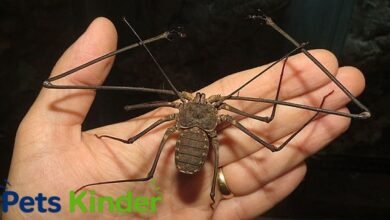
Whip Spiders: The Ancient Eight-Legged Wonders That Look Scarier Than They Are

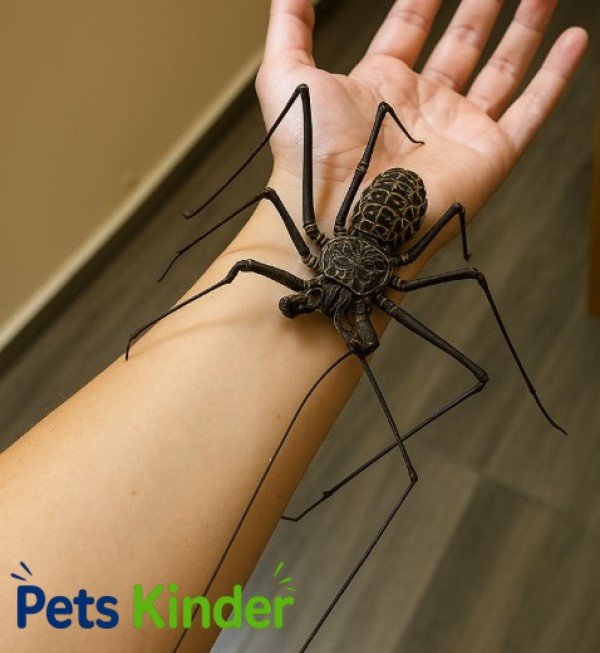
If you’ve ever stumbled across a photo of a whip spider online, your first reaction was probably somewhere between fascination and pure horror. These creatures look like something out of a science fiction film long, spindly legs, alien-like bodies, and whip-like appendages stretching several times the length of their frame. But here’s the thing: whip spiders are far more fascinating than frightening, and once you learn about them, it’s hard not to feel a deep respect for these ancient arachnids. Whether you’re a seasoned exotic pet enthusiast or simply a curious nature lover, there’s plenty to discover about one of the animal kingdom’s most misunderstood creatures.
What Exactly Is a Whip Spider?
A whip spider also known by the scientific order name Amblypygi is not actually a spider at all. Despite the name and the unmistakable spider-like appearance, whip spiders belong to their own distinct arachnid order, separate from true spiders. They’re more closely related to scorpions and spiders than they are to insects, but they carry no venom and produce no silk. Essentially, they’re harmless to humans.
The term “spider whip” or “whipped spider” is sometimes used colloquially to describe these animals, and the names are fitting. Their most striking feature is a pair of extremely long front legs called pedipalps and antenniform legs that they use to sense vibrations and navigate their environment with remarkable precision. These sensory legs can stretch to an astonishing length, making them appear far more intimidating than their behavior suggests.
Where Do They Come From?
Whip spiders are found across tropical and subtropical regions worldwide. They thrive in humid environments think rainforests of Central and South America, sub-Saharan Africa, Southeast Asia, and parts of the Middle East. They’re nocturnal hunters that prefer dark, damp hiding spots under bark, inside caves, and beneath leaf litter. During the day, they press their flat bodies against vertical surfaces, often moving sideways like a crab when disturbed.
Key Features and Physical Characteristics
Whip Spider Size: Smaller Than You’d Think
One of the most common misconceptions about whip spiders involves their actual body size. When people see photos, they tend to fixate on the legspan and that part can genuinely be impressive. The whip spider size varies considerably by species, but most have a body length ranging from just 0.5 cm to about 4.5 cm. However, their total legspan including those iconic sensory front legs can reach up to 60 cm (about two feet) in larger species like Heterophrynus batesii.
Their bodies are flat and wide, an evolutionary adaptation that lets them squeeze into narrow crevices with ease. They have eight legs like all arachnids, but only six of those function as walking legs. The front pair has evolved into those extraordinary sensory antennae-like limbs that constantly probe the environment. Their eyes, though they have several, aren’t particularly sharp whip spiders rely far more on touch and vibration than on vision.
Pedipalps: Their Built-In Hunting Tools
The pedipalps the two large clawed appendages near the mouth serve as both weapons and navigation tools. When a whip spider detects prey, it uses these strong, spiny pedipalps to grab and hold onto insects, small arthropods, and occasionally tiny frogs or lizards. They’re surprisingly fast strikers once they locate their target.
Diet and Nutrition
Whip spiders are carnivorous predators. In the wild, they primarily feed on crickets, moths, cockroaches, and other insects that wander within sensing range. They don’t chase prey over distances. Instead, they wait patiently in ambush often motionless for hours then strike with impressive speed when something edible comes within reach. Their feeding strategy is all about patience and precision rather than pursuit.
For captive whip spiders, replicating this diet is relatively straightforward. Most keepers feed them gut-loaded crickets, dubia roaches, and mealworms. Juveniles typically eat every few days, while adults can go one to two weeks between feedings without any health issues. Overfeeding is rarely a problem, since whip spiders tend to self-regulate naturally. Fresh water should always be available, typically provided through light misting of enclosure walls.
Whip Spiders in Pop Culture and Celebrity Attention
You might be surprised to learn that whip spiders have had their Hollywood moment. The reality television series Fear Factor and I’m a Celebrity… Get Me Out of Here! have both featured whip spiders in their iconic challenge segments, where contestants face their deepest fears. British actress and television personality Gillian McKeith famously had a near-meltdown encounter with these creatures during her appearance on I’m a Celebrity, bringing whip spiders to millions of viewers overnight. Similarly, celebrity survival expert Bear Grylls has encountered and discussed whip spiders during his various wilderness programs, often pointing out correctly that despite their terrifying appearance, they pose absolutely no danger to humans. These pop culture moments have, ironically, driven a surge of public curiosity and even affection for the species.
Whip Spider for Sale: Keeping One as a Pet
Are They Legal and Available?
The interest in keeping these animals has grown steadily over the past decade. If you’re searching “whip spider for sale,” you’ll find several reputable exotic arachnid breeders and specialty reptile expos that carry them. Common pet species include Damon medius, Damon variegatus, and Heterophrynus batesii. Prices typically range from $30 to $150 depending on species and size, with adult females often fetching more due to their breeding potential.
Before purchasing, always check local regulations. Some states and countries restrict ownership of exotic arachnids, so doing your homework is essential. Captive-bred individuals are always preferable to wild-caught ones they’re generally healthier, less stressed, and more ethically sourced.
Housing and Care Requirements
Whip spiders need a vertically oriented enclosure with enough height for them to hang naturally. A 10-gallon terrarium works well for a single adult, though taller enclosures are better. They need high humidity typically 70 to 90 percent along with warm temperatures between 75°F and 85°F. Cork bark, hollow logs, and pieces of driftwood make excellent hides. They’re not aggressive toward humans and rarely bite, even when handled.
Interestingly, whip spiders are one of the few arachnids known to exhibit social tolerance. Some species can be kept in pairs or small groups without aggression, which makes them particularly appealing to hobbyists who enjoy observing animal behavior.
Health, Care, and Common Issues
Generally speaking, whip spiders are hardy animals. However, a few common issues do arise in captivity. Dehydration is the most frequent problem inadequate misting leads to failed molts, which can be fatal. Always keep the enclosure humid and provide fresh water. Mold can become an issue in overly wet setups, so good ventilation balanced with moisture retention is key.
Molting is a vulnerable time for all arachnids. During this period, whip spiders shed their exoskeleton to grow. They should not be fed for a week before and after a molt, as the new exoskeleton takes time to harden. Disturbing a molting animal can cause permanent injury or death.
Parasites are uncommon in captive-bred individuals but can occur in wild-caught specimens. If you notice unusual lethargy, refusal to eat over extended periods, or visible irritation, consulting an exotic animal veterinarian is wise. Finding a vet experienced with arachnids is increasingly possible as the exotic pet hobby expands.
Lifespan and Long-Term Considerations
Whip spiders are surprisingly long-lived compared to many exotic invertebrates. Females of most common species live between 10 and 15 years in captivity when properly cared for. Males tend to have shorter lifespans, often around 5 to 7 years. This means that adopting a whip spider is a genuine long-term commitment not an impulse buy.
Their slow metabolisms and low-maintenance feeding schedules make them relatively affordable to keep over time. They don’t require UV lighting, specialized supplements, or elaborate feeding routines. What they do require is consistency stable humidity, appropriate temperatures, and a stress-free environment. Given those conditions, they can thrive for over a decade.
Final Thoughts
The whip spider is, without question, one of nature’s most visually dramatic creatures. Those enormous sensory legs, the sideways scuttle, the prehistoric silhouette it all adds up to an animal that inspires visceral reactions at first glance. But beneath that intimidating exterior is a harmless, intelligent, and genuinely fascinating arachnid with a longer evolutionary history than most animals alive today. Whether you’re considering a whip spider for sale or simply want to understand what you saw crawling across a rainforest documentary, one thing is clear this creature deserves far more appreciation than fear.