It fits in the palm of your hand, and it could kill you within minutes. The blue ringed octopus is one of the ocean’s most paradoxical creatures breathtakingly beautiful, impossibly small, and lethally dangerous. Divers, snorkelers, and beachcombers across the Indo-Pacific encounter these animals more often than most people realize, frequently without knowing it. Understanding this remarkable creature isn’t just fascinating from a wildlife perspective. It could genuinely save your life.
What Exactly Is the Blue Ringed Octopus?
The blue ringed octopus is a group of four closely related species belonging to the genus Hapalochlaena. These species the greater blue-ringed octopus, the southern blue-ringed octopus, the blue-lined octopus, and the Hapalochlaena nierstraszi all share the same iconic electric-blue ring markings and carry the same terrifying venom. They inhabit shallow coastal waters, tidal pools, and coral reef systems throughout the Pacific and Indian Oceans, ranging from Australia and Japan to the Philippines and Sri Lanka.
Despite its fearsome reputation, the blue ringed octopus is naturally shy and reclusive. It spends most of its time hiding inside shells, crevices, and dense algae patches, emerging primarily at night to hunt. It only displays its vivid blue rings when threatened or agitated a blazing warning signal that most predators have learned to respect. Unfortunately, curious humans don’t always read that warning in time.
Key Physical Characteristics of the Blue Ringed Octopus
Size, Appearance, and Those Iconic Rings
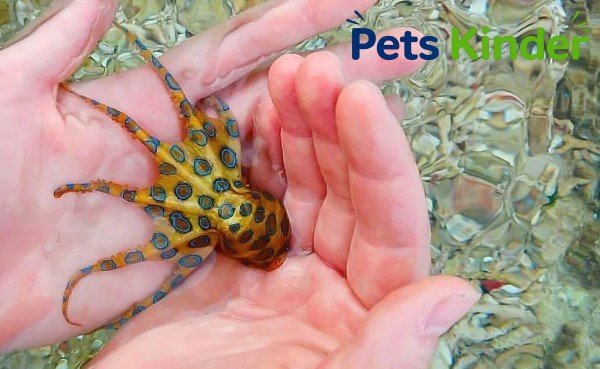
The blue ringed octopus is remarkably small. Most adults measure just 5 to 8 inches across, including their outstretched arms, and weigh less than an ounce. Their base coloration is typically a mottled yellowish-brown, helping them blend seamlessly into sandy substrate, rubble, and rocky surfaces. However, when threatened, the blue ring octopus undergoes a dramatic visual transformation up to 60 iridescent blue rings flash and pulse across its body and arms in an unmistakable display of warning.
Those rings aren’t just for show. The iridescent blue color comes from structural coloration the same optical phenomenon that makes butterfly wings shimmer. The rings contain specialized cells called iridophores that reflect light in specific wavelengths, producing that vivid, almost neon blue that seems to glow from within. It’s one of nature’s most efficient warning systems, instantly recognizable and deeply unsettling to anything that has learned what it means.
What Does a Baby Octopus Look Like?
A baby octopus of this species hatches from an egg already fully formed and immediately independent. The female blue ringed octopus lays a clutch of roughly 50 to 100 eggs and carries them under her arms for around 50 days until they hatch. Remarkably, each baby octopus is already venomous at birth a critical survival advantage from day one. These hatchlings are tiny, often just a few millimeters wide, but their cellular structure and venom-producing bacteria are already fully operational. The mother, sadly, dies shortly after her eggs hatch, having stopped eating during the entire brooding period.
Blue Ringed Octopus Diet and Feeding Habits
What Does the Blue Ringed Octopus Eat?
The blue ringed octopus is a highly effective nocturnal predator that feeds primarily on small crustaceans, particularly shrimp and crabs. It also consumes small fish and occasionally other mollusks when the opportunity presents itself. Its hunting technique is elegantly efficient it either pounces directly on unsuspecting prey or uses its siphon to jet a targeted stream of venomous saliva into the water near hidden prey, paralyzing the target before moving in to feed. This method of remote envenomation is rare among cephalopods and speaks to the blue ring octopus’s sophisticated predatory toolkit.
The Role of Venom in Feeding
The venom the blue ringed octopus uses for hunting is the same toxin responsible for human fatalities tetrodotoxin, or TTX. This compound blocks sodium channels in nerve cells, preventing muscle contraction and ultimately causing paralysis. For a small crab or shrimp, even a tiny amount of TTX acts almost instantly. The octopus then uses its sharp beak to pierce the prey’s exoskeleton and consume the soft tissue inside. Interestingly, the blue ringed octopus doesn’t produce tetrodotoxin itself the toxin is manufactured by symbiotic bacteria living within its salivary glands.
Tetrodotoxin: The Science Behind the Venom
Tetrodotoxin is one of the most potent neurotoxins known to science, estimated to be more than 1,000 times more toxic than cyanide by weight. A single blue ringed octopus carries enough TTX to paralyze or kill up to 26 adult humans. There is currently no antivenom available. The only treatment for TTX envenomation is immediate and sustained artificial respiration, keeping the victim’s lungs functioning until the toxin metabolizes out of the system a process that can take several hours. Survival depends entirely on rapid first response.
Health, Care, and Keeping Blue Ringed Octopus in Captivity
Can You Legally Keep a Blue Ringed Octopus?
In some regions, keeping a blue ringed octopus in a private aquarium is technically legal, but it is universally considered irresponsible and dangerous. Several countries and US states have enacted specific bans on private ownership due to the extreme public safety risk. Even experienced marine biologists and aquarium professionals treat these animals with extreme caution. The combination of a small, fast-moving animal carrying untreatable venom in a domestic setting creates an unacceptable level of risk for owners, family members, and first responders.
Captive Care Requirements and Tank Conditions
Professional facilities that house the blue ringed octopus maintain saltwater tanks with carefully regulated temperature, salinity, and oxygenation levels. Water temperatures between 72 and 78 degrees Fahrenheit suit most species, and the tank must include plenty of hiding spaces such as shells, PVC pipes, and rockwork, since these animals are highly stressed by open exposure. Feeding typically involves live or freshly killed shrimp and crab several times per week. Even in professional settings, staff never handle these animals directly and use specialized tools to manage tank maintenance safely.
Common Health Issues and Stress Responses
Octopuses in general are highly intelligent, sensitive animals that deteriorate quickly under suboptimal conditions. The blue ringed octopus is particularly susceptible to stress-induced health decline when lighting is too bright, water quality drops, or the tank lacks adequate enrichment and hiding spaces. Common issues in captive settings include refusal to eat, skin lesions, erratic swimming behavior, and premature senescence a natural process that accelerates dramatically under stress. Additionally, their relatively short lifespan of 1 to 2 years means they cycle through their life stages rapidly, and captive animals often live shorter lives than wild counterparts due to environmental stressors.
Lifespan, Reproduction, and Long-Term Conservation
How Long Does the Blue Ringed Octopus Live?
The blue ringed octopus lives a surprisingly short life, typically ranging from 1 to 2 years in the wild. Like all octopuses, it follows a semelparous reproductive strategy meaning it reproduces once and then dies. Males die shortly after mating, while females survive just long enough to brood and hatch their eggs before their own biological systems shut down. This rapid lifecycle means individual blue ring octopus populations can fluctuate significantly from year to year, making long-term population monitoring particularly challenging for researchers.
Conservation Status and Environmental Threats
Currently, the blue ringed octopus is not listed as endangered or threatened, but it faces mounting pressure from coral reef degradation, ocean warming, and coastal development across its range. As shallow-water reef systems bleach and collapse due to rising ocean temperatures, the habitat and prey base the blue ringed octopus depends on become increasingly fragmented. Furthermore, collection for the illegal exotic pet trade and incidental capture in tidal pool disturbances contribute to localized population declines in heavily trafficked coastal areas of Southeast Asia and Australia.
Famous Personalities Who’ve Spotlighted This Deadly Species
Marine biologist and ocean conservation activist Sylvia Earle, widely regarded as one of the foremost ocean scientists alive today, has repeatedly highlighted the blue ringed octopus in discussions about the extraordinary biodiversity of Indo-Pacific reef ecosystems. Earle has emphasized that creatures like the blue ring octopus represent nature’s ingenuity at its most extreme compact, efficient, and perfectly adapted and that protecting the reef systems they inhabit is non-negotiable for the health of the broader ocean. Her advocacy has brought renewed scientific and public attention to these overlooked yet critical species.
What to Do If You Encounter a Blue Ringed Octopus
Most bites from the blue ringed octopus occur because someone unknowingly picked the animal up often from a tidal pool or while handling shells on a beach. The bite itself is often painless, which is precisely what makes it so dangerous. Symptoms of TTX envenomation include numbness, nausea, vision disturbances, and rapidly progressing muscle paralysis. If you ever suspect a blue ringed octopus bite, call emergency services immediately and begin rescue breathing if the victim loses consciousness. Do not wait for visible symptoms to worsen. Time is the only treatment available.
The single most important rule is simple: never touch a blue ringed octopus, regardless of how calm or inactive it appears. A resting blue ring octopus that isn’t flashing its rings is not necessarily safe it may simply not feel threatened yet. Admire this extraordinary animal from a respectful distance, photograph it freely, and leave it exactly where you found it. That’s the safest and most responsible way to share the ocean with one of its most dangerous and dazzling residents.