Spider Monkey Pet: What the Breeder Won’t Tell You Before You Hand Over $30,000

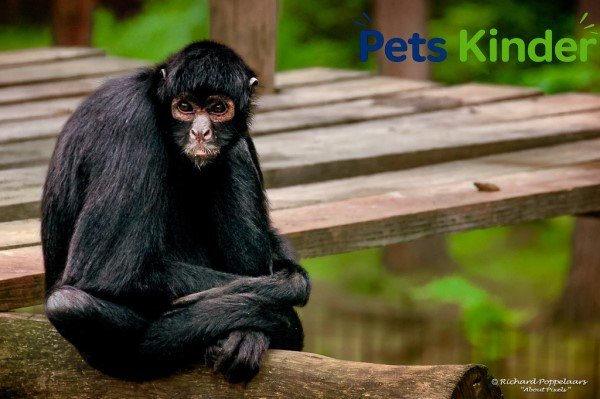
There’s something undeniably magnetic about the idea of a spider monkey pet. These long-limbed, dark-eyed primates look like they belong in a nature documentary intelligent, expressive, and somehow deeply relatable. It’s no surprise that people search for them by the thousands every month. But here’s the thing: almost everything the average person believes about keeping a spider monkey as a pet is either incomplete, romanticized, or flat-out wrong. This article won’t sugarcoat it. If you’re seriously considering one of these animals, you need facts, not fantasy.
Getting to Know the Spider Monkey
Spider monkeys belong to the genus Ateles and are native to the lush tropical forests stretching from southern Mexico through Central America and into South America. Several species exist under this umbrella the black-handed spider monkey, the Geoffroy’s spider monkey, and the white-bellied spider monkey among the most recognized. Their name comes from their remarkable body shape: extraordinarily long arms and legs, plus a prehensile tail that works as a full fifth limb, giving them a spider-like silhouette when they hang and swing through the treetops.
In the wild, spider monkeys live in fission-fusion societies large social groups that break into smaller subgroups and reform throughout the day. They travel up to 25 miles daily. They spend most of their waking hours 80 to 100 feet off the ground. They are, in every measurable sense, built for a life that a human home simply cannot replicate.
Key Features and Characteristics
Body and Physical Capabilities
Spider monkeys are medium-to-large primates. Adults generally weigh between 13 and 24 pounds, with a body length running 16 to 24 inches but their tail adds another 24 to 32 inches on top of that. Their arms are proportionally longer than those of almost any other primate, and their fingers are long and hook-like, with a reduced or absent thumb that makes brachiation (swinging hand-over-hand) incredibly efficient.
That physical build translates directly into what life with one looks like. They need to move constantly, vigorously, and at height. They don’t walk sedately around a living room. They leap, swing, and launch themselves across open space. Without adequate room and structure to do this, they become frustrated and destructive in ways that can genuinely damage a home and injure people.
Intelligence and Temperament
Smarter Than You’re Ready For
Spider monkeys consistently rank among the most intelligent New World primates. They demonstrate long-term memory, tool-use concepts, advanced problem-solving, and an understanding of cause and effect that surprises even experienced researchers. That intelligence is one of the main things that draws people to the idea of a spider monkey pet and also one of the chief reasons ownership so frequently fails.
A smart, bored animal is a dangerous animal. Spider monkeys that don’t receive sufficient mental stimulation and social interaction will dismantle their enclosures, manipulate locks, and act out with screaming, biting, and destruction. They remember negative experiences and hold grudges. They form intense attachments and suffer profoundly when those attachments are disrupted.
Spider Monkey Pet Price: The Full Financial Picture
Let’s get into numbers, because this is where aspiration meets reality for most people.
How Much Is a Spider Monkey Pet to Purchase?
When people ask how much is a spider monkey pet, they’re usually thinking about the sticker price from a breeder. In states where private primate ownership is legal, spider monkey pet price typically ranges from $6,000 to $30,000 at the point of sale. Species, age, lineage, and the breeder’s certification status all influence where within that range a specific animal falls. Generally speaking, a baby spider monkey pet commands the highest prices often $20,000 or more because buyers associate youth with tameness and bonding potential.
That upfront cost, however, is only the beginning.
The Lifetime Cost Nobody Advertises
Enclosure and Housing
Spider monkeys cannot safely or humanely live inside a standard home without purpose-built housing. A minimum acceptable outdoor enclosure measures 30 feet by 30 feet with at minimum 15 feet of vertical height, constructed from heavy-gauge welded wire or steel cable, with climbing structures, platforms, ropes, hammocks, and rotation enrichment items. Building such an enclosure typically costs between $15,000 and $50,000. That figure doesn’t include permits, site preparation, or weather protection.
Veterinary Expenses
Locating an exotic animal veterinarian with genuine primate experience is difficult in most parts of the country. Those who exist charge significantly more than standard veterinary practices, and every procedure from annual wellness visits to anesthesia protocols to bloodwork costs more with a primate than with a dog or cat. Budget conservatively at $2,000 to $5,000 per year for routine care, and substantially more in years involving illness, injury, or dental procedures.
Diet and Enrichment
Feeding a spider monkey properly costs several hundred dollars per month. Fresh, varied produce mangoes, figs, berries, papaya, leafy greens, and vegetables forms the backbone of the diet, supplemented by commercial primate chow and occasional protein. Enrichment items, foraging puzzles, and rotating toys add ongoing cost that most prospective owners never factor in at all.
Baby Spider Monkey Pet: The Truth About Starting Young
The appeal of a baby spider monkey pet is understandable. Infants are small, wide-eyed, and deeply responsive to human contact. Breeders frequently market baby animals as easier to tame and more likely to bond. There’s a kernel of truth in this early socialization with humans does shape behavior. But the fuller truth is far more complicated.
Spider monkey infants in the wild spend years in constant physical contact with their mothers, learning social cues, emotional regulation, and communication from within a complex troop structure. Hand-raised babies miss all of this. They often develop attachment disorders, anxiety, and behavioral deficits that become painfully obvious as they mature. Furthermore, the adorable baby phase lasts only a few years before the animal becomes a full grown spider monkey pet with adult strength, adult hormones, and adult temperament.
Full Grown Spider Monkey Pet: When Reality Sets In
Most ownership stories that end badly follow the same arc: a delightful infant becomes a full grown spider monkey pet, and the owner is completely unprepared for what that means.
Adult spider monkeys are significantly stronger than their size suggests. Their grip strength is formidable, and their bites when they choose to use them cause serious injury. Adult males and females both experience hormonal cycles that intensify aggression, territorial behavior, and general unpredictability. Strangers, children, and other household pets become targets. Even owners who have built genuine bonds with their animals describe a marked shift in temperament once the animal hits sexual maturity around age 4 or 5.
Full grown animals are also loud in ways that neighbors notice immediately. Spider monkey vocalizations particularly the long calls they produce at dawn carry across significant distances. No amount of indoor containment muffles them adequately.
Diet and Nutrition
Getting nutrition right is one of the most important and most underestimated aspects of spider monkey care. In the wild, these animals consume a diet that’s roughly 70 to 90 percent fruit, with leaves, seeds, flowers, and occasional insects filling the gaps. Replicating that diversity in captivity requires real effort and consistent expense.
A well-structured captive diet includes a rotating variety of fresh tropical and temperate fruits, dark leafy greens, raw vegetables, and commercial primate biscuits formulated to fill micronutrient gaps. Calcium and vitamin D3 deserve particular attention deficiencies in both are extremely common in captive primates and lead directly to metabolic bone disease. Animals that don’t access adequate natural sunlight need supplementation, but dosing must be guided by a vet, since over-supplementation carries its own risks. Sugary treats, processed human food, and dairy should be strictly avoided. Fresh water should always be available and refreshed multiple times daily.
Health, Care, and Common Diseases
Zoonotic Disease Risks
One of the most serious and least discussed aspects of spider monkey ownership is the bidirectional disease risk. Spider monkeys can transmit herpes B virus, tuberculosis, salmonella, and various parasitic infections to humans. They’re also highly susceptible to human respiratory viruses. A household cold can become a life-threatening pneumonia in a monkey with no built-up immunity to common human pathogens. This creates a genuine public health consideration that goes far beyond individual owner risk.
Common Health Problems in Captivity
Metabolic Bone Disease
Calcium deficiency, whether from dietary inadequacy or insufficient UV-B exposure, leads to softening and weakening of the bones. Fractures occur with minimal trauma. The condition is painful, progressive, and unfortunately common in pet primates managed without proper nutritional oversight. Caught early and corrected aggressively, it’s manageable. Left unaddressed, it’s permanently debilitating.
Psychological and Behavioral Disorders
Captive spider monkeys especially those kept alone frequently develop stereotypic behaviors: repetitive rocking, hair-pulling, self-biting, and pacing. These are recognized indicators of chronic psychological stress. Once established, they rarely resolve fully even when conditions improve. They signal an animal that is not thriving, regardless of how well-fed or physically healthy it appears.
Respiratory Illness
Upper respiratory infections can escalate quickly in spider monkeys. Bacterial pneumonia, in particular, progresses rapidly and requires prompt veterinary intervention. Animals with weakened immune systems often those experiencing chronic stress are especially vulnerable.
Routine Care
Daily care involves far more than feeding. Enclosure cleaning, enrichment rotation, social interaction, health monitoring, and claw inspection are all part of a baseline routine. Additionally, spider monkeys need mental engagement throughout the day foraging setups, puzzle feeders, novel objects, and varied human interaction keep cognitive needs partially met. This is a multi-hour daily commitment, every single day, for decades.
Lifespan and Long-Term Considerations
Spider monkeys in captivity commonly live between 20 and 30 years with proper care. That number deserves a moment of genuine reflection. A person who acquires a baby spider monkey pet at age 28 may be managing that animal’s care into their late 50s. Career changes, relocations, marriages, children, aging parents every major life event becomes infinitely more complicated when a primate with complex needs is part of the equation.
Rehoming an adult spider monkey is extraordinarily difficult. Accredited sanctuaries are chronically full. Reputable private buyers are rare. And surrendering to an unvetted situation often means trading one inadequate environment for another. The decision to bring a spider monkey into your life is, realistically, a multi-decade commitment with very few exit ramps.
Legal Considerations Before Anything Else
Laws governing private primate ownership in the United States vary dramatically by state and municipality. Some states permit it with an exotic animal permit. Others prohibit it entirely. Federal regulations under the Endangered Species Act add another layer of complexity, particularly around interstate transport and certain species. Anyone genuinely considering a spider monkey pet must consult their state wildlife agency and an attorney experienced in exotic animal law before contacting a breeder or making any financial commitment.
The Bottom Line
A spider monkey pet isn’t a status symbol or an exotic upgrade from a conventional companion animal. It’s a deeply social, highly intelligent wild animal with needs that are genuinely difficult and for most people, impossible to meet in a domestic setting. The spider monkey pet price is real, the legal barriers are real, and the animal’s suffering when those needs go unmet is equally real.
If this species captivates you and it’s easy to understand why channel that into something that actually helps them. Support primate sanctuaries, fund conservation efforts in their native range, or simply spread accurate information. Admiration for these animals is wonderful. Ownership, in most cases, is not the right expression of it.