Veiled Chameleon: The Complete Owner’s Guide to Care, Diet, and What Makes Them Extraordinary

There’s something almost otherworldly about a veiled chameleon. The way its eyes rotate independently, the way its skin shifts through a spectrum of greens, yellows, and blues depending on its mood it feels less like a lizard and more like a living piece of abstract art. It’s no surprise that reptile enthusiasts across the United States have fallen hard for this species. But owning one is a serious commitment, and understanding what makes the veiled chameleon tick from what it eats to how long it lives is the difference between a thriving animal and a struggling one. This guide covers everything, front to back.
What Is a Veiled Chameleon?
The veiled chameleon, scientifically known as Chamaeleo calyptratus, is native to the mountainous rainforests and coastal regions of Yemen and Saudi Arabia. It’s one of the most popular chameleon species kept in captivity today, and for good reason. It’s hardy relative to other chameleon species, it’s visually stunning, and it’s large enough that its behaviors and color changes are easy to observe and appreciate.
Key Physical Characteristics
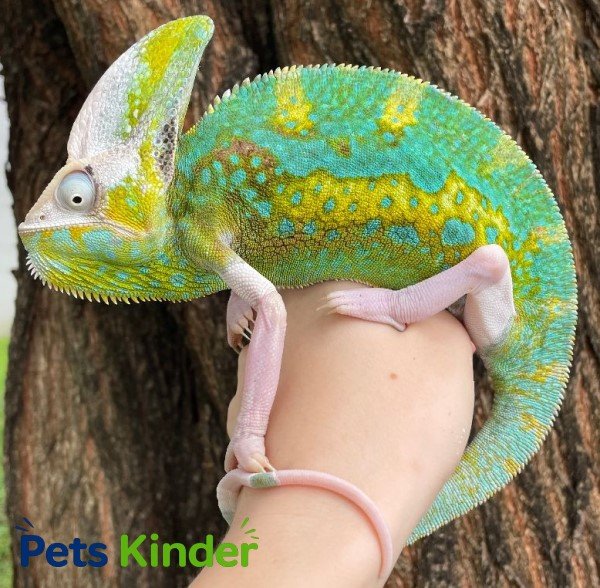
The most immediately striking feature of the veiled chameleon is the casque that tall, helmet-like ridge on top of its head. Both males and females have this structure, but males develop significantly taller casques, sometimes reaching up to two inches in height. Scientists believe the casque helps channel moisture from morning dew and fog down toward the chameleon’s mouth in its arid native habitat. That’s clever hydration engineering built right into the skull.
Size and Appearance
Adult male veiled chameleons typically grow between 17 and 24 inches in total length, while females are noticeably smaller, usually ranging from 10 to 13 inches. Males display the most dramatic coloration vivid bands of green, turquoise, yellow, and even orange decorate their bodies, shifting with mood, temperature, and light. Females are generally a softer green with white or yellowish spotting. Both sexes have laterally compressed bodies, zygodactyl feet for gripping branches, and prehensile tails that act as a fifth limb.
Color Changes and Communication
Unlike the popular myth, chameleons don’t change color primarily for camouflage. Color change in the veiled chameleon is primarily a form of communication. A dark, muted animal is often stressed, cold, or sick. Bright, vivid coloring typically signals excitement, confidence, or readiness to mate. A gravid female one carrying eggs turns dark green with blue and yellow spots to signal she’s not receptive to mating. Learning to read these color cues is one of the most rewarding parts of keeping this species.
What Do Chameleons Eat? Diet and Nutrition Explained
If you’ve been asking yourself “what do chameleons eat?” you’re not alone. Diet is one of the most commonly misunderstood aspects of veiled chameleon care, and getting it wrong can significantly shorten your animal’s life.
Insects: The Foundation of Their Diet
Veiled chameleons are primarily insectivores. Crickets are the most commonly used feeder insect and make an excellent staple food, but variety is absolutely essential. Dubia roaches, hornworms, silkworms, black soldier fly larvae, and the occasional waxworm or superworm all contribute to a well-rounded diet. Feeding the same insect every day creates nutritional imbalances over time, so rotating through several feeder species is strongly recommended.
Gut-loading the practice of feeding your feeder insects nutritious foods before offering them to your chameleon is non-negotiable. Insects that are fed poor diets pass along those nutritional deficiencies to your chameleon. Leafy greens, carrots, squash, and commercial gut-load formulas all work well for keeping your feeders nutritionally dense.
The Role of Supplementation
Calcium and vitamin D3 supplementation is critical for veiled chameleons in captivity. Without adequate calcium and proper UVB lighting, these animals develop metabolic bone disease a painful and often fatal condition. Dust feeder insects with a calcium supplement at most feedings, and use a vitamin supplement with D3 two to three times per week. However, over-supplementation particularly of vitamin A can be just as harmful as a deficiency, so balance and consistency matter.
Plant Matter: An Often-Overlooked Part of Their Diet
Here’s something many first-time owners don’t know: veiled chameleons are one of the few chameleon species that eat plant matter. In the wild, they consume leaves, flowers, and vegetation, especially when insects are scarce. In captivity, offering small amounts of safe plants like pothos leaves, hibiscus flowers, collard greens, and dandelion greens enriches their diet and provides hydration. Avoid spinach, iceberg lettuce, and any plant treated with pesticides.
Veiled Chameleon for Sale: What to Know Before You Buy
The phrase “chameleon for sale” pulls up thousands of listings online and in pet stores, but buyer caution is absolutely warranted. The source of your animal matters enormously both for the animal’s health and for your experience as an owner.
Captive-Bred vs. Wild-Caught
Always choose a captive-bred veiled chameleon from a reputable breeder. Wild-caught animals are heavily stressed from capture and transport, frequently carry internal parasites, and rarely adapt well to captive life. Captive-bred animals, by contrast, are accustomed to human presence, eating captive-raised insects, and living in enclosures. They are almost always healthier, calmer, and longer-lived.
When evaluating a chameleon for sale, look for bright, alert eyes, a body that’s well-filled out (not sunken or bony), smooth and even skin without retained shed, and active movement when stimulated. Avoid any animal that sits motionless at the bottom of its enclosure, gapes its mouth, or has discharge around the eyes or nose these are all warning signs of illness.
Housing, Care, and Environmental Needs
Veiled chameleons are arboreal they live in trees and need vertical space above all else. A screen enclosure measuring at least 24 x 24 x 48 inches is the minimum for an adult, and bigger is always better. Screen enclosures promote the airflow this species needs; glass tanks trap humidity and heat in ways that quickly become dangerous.
Temperature gradients are essential. Provide a basking spot of around 85–95°F and allow the ambient temperature to drop to the low-to-mid 70s°F in the cooler areas of the enclosure. At night, temperatures can safely drop into the 60s°F, which actually mirrors the cooler mountain evenings of their native Yemen. UVB lighting is not optional it’s life-sustaining. A quality linear UVB bulb should run the length of the enclosure and be replaced every six months, even if it still produces visible light, because UVB output degrades before the bulb burns out.
Hydration: A Critical and Often Missed Need
Veiled chameleons do not drink from standing water bowls. In the wild, they drink droplets from leaves after rain or morning dew. In captivity, this means misting the enclosure two to three times daily using a pressure sprayer or an automatic misting system. Alternatively, a drip system that creates slow, steady water droplets on leaves works excellently. Dehydration is one of the leading causes of premature death in captive chameleons, so consistent hydration routines are non-negotiable.
Health Issues and Common Diseases
Even with excellent care, veiled chameleons are susceptible to a range of health issues. Knowing what to watch for can save your animal’s life.
Metabolic Bone Disease (MBD)
As mentioned earlier, MBD is the most common preventable disease in captive chameleons. It results from calcium deficiency combined with insufficient UVB exposure. Symptoms include rubbery or bent limbs, difficulty gripping branches, tremors, and lethargy. Caught early, it can be treated with veterinary intervention and improved husbandry. Left untreated, it’s fatal.
Respiratory Infections
Respiratory infections typically result from improper temperature or humidity levels usually enclosures that are too cold, too damp, or poorly ventilated. Wheezing, open-mouth breathing, and mucus around the mouth or nostrils are all red flags. A reptile-experienced veterinarian should be consulted immediately if any of these symptoms appear.
Parasites and Egg Retention
Internal parasites are common in wild-caught animals but can also appear in captive-bred ones. Routine fecal exams by a reptile vet help catch these early. Female veiled chameleons are prolific egg layers they can produce clutches of 20 to 85 eggs multiple times per year, even without a male present. Without a proper laying site (a deep container of moist soil), females can become egg-bound, a life-threatening condition.
Lifespan and Long-Term Considerations
With proper care, a male veiled chameleon can live five to eight years in captivity. Females, unfortunately, have shorter lifespans typically three to five years largely due to the physical toll of repeated egg production. Providing females with a laying site and ensuring excellent nutrition extends their lives meaningfully.
Owning a veiled chameleon is a long-term commitment that demands consistent attention to lighting schedules, feeding routines, hydration, and temperature management. These are not low-maintenance animals. But for owners who invest the time and care, the rewards watching a brilliantly colored, prehistoric-looking creature thrive in a well-built enclosure are genuinely extraordinary.
Final Thoughts
The veiled chameleon is one of the most captivating reptiles available in the hobby today. From its iconic casque and stunning color palette to its nuanced dietary needs and expressive communication, every layer of this species rewards closer attention. Whether you’re researching what chameleons eat, considering a chameleon for sale, or deep into the hobby already, understanding this animal fully is the foundation of keeping it well. Give it what it needs, and it will give you years of wonder in return.