Walk into any barn, and the horse halter is the first piece of equipment you’ll see hanging by every stall door. It’s so commonplace that many horse owners take it for granted tossing one on without a second thought. But the halter is arguably the most foundational piece of equipment in your entire tack collection. It’s the first thing a foal learns to accept and the last thing an old horse wears on the way to the vet. Getting it right the right fit, the right material, the right use matters far more than most beginners realize.
What Exactly Is a Horse Halter?
A horse halter is a headpiece designed to fit over a horse’s head, sitting behind the ears and around the nose, used to lead, tie, or restrain the animal. Unlike a bridle, it has no bit and is not used for riding. Its primary job is simple: giving humans a safe, reliable way to handle horses on the ground.
That simplicity, though, is deceptive. The design, construction, and fit of a horse halter directly affect the animal’s comfort, your safety, and the effectiveness of your groundwork. A poorly fitted or cheaply made halter can cause pressure sores, teach a horse to pull, or in the worst cases get snagged on fencing and cause a serious injury or death.
The Anatomy of a Horse Halter
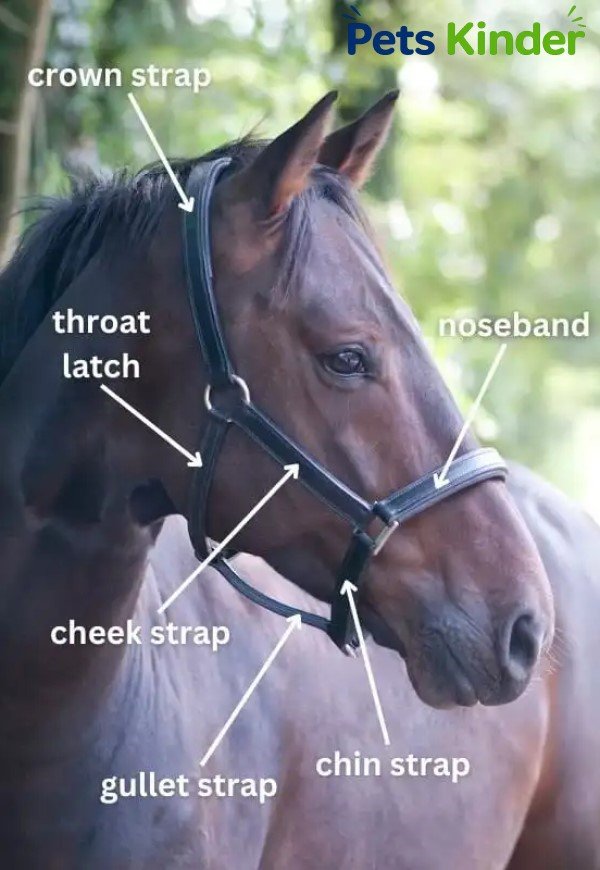
Understanding the parts helps you use and adjust one correctly. A standard halter consists of a noseband (which sits across the nose), a crownpiece (which goes over the poll behind the ears), a throatlatch (which runs under the jaw), and cheekpieces connecting everything together. Most halters also have a chin strap running under the chin for stability. The lead ring typically a large metal ring sits under the chin where you attach a lead rope.
Each part plays a specific role in distributing pressure. When a horse pulls back, force spreads across the noseband and poll rather than concentrating in one spot. A well-designed halter manages that pressure efficiently; a poorly designed one concentrates it, which causes pain and teaches the horse that pulling is the only escape.
Types of Horse Halters and What Sets Them Apart
Not all halters are built the same, and choosing the right type for your situation is essential.
Nylon Halters
Nylon halters are the workhorses of the barn affordable, durable, and easy to clean. They come in virtually every color imaginable, which makes them popular for everyday use. However, nylon does not break under pressure. That’s a serious concern when it comes to safety turnout. If a horse gets a nylon halter caught on a fence post or gate latch while turned out, it won’t snap free. The horse panics, pulls, and can fracture the poll, snap the neck, or suffer severe rope burns trying to get loose.
For this reason, most experienced horsemen have a firm rule: never turn a horse out in a nylon halter unsupervised.
Leather Halters
Leather halters are the traditional choice, and they remain the safest option for turnout. Quality leather will break under extreme pressure not easily, but enough to release a panicked horse from a dangerous snag. They conform to the horse’s face over time, fitting more comfortably than nylon. They do require regular conditioning to prevent drying and cracking, and they cost considerably more upfront. Still, for owners who turn horses out in halters, leather is the responsible choice.
Rope Halters
Rope halters have surged in popularity alongside natural horsemanship methods. Made from a single continuous piece of knotted rope, they apply more focused pressure than padded nylon or leather when a horse leans or pulls. That focused pressure makes them highly effective training tools horses respond to them quickly and precisely. However, they’re not designed for tying or turnout and should only be used during active training sessions with a knowledgeable handler.
Breakaway Halters
Breakaway halters combine nylon construction with a leather crown or a leather tab near the ring that snaps under sufficient pressure. They offer the everyday durability of nylon with a built-in safety release. For owners who turn horses out in halters whether for easy catching or medical reasons breakaway halters offer the best compromise between practicality and safety.
Fitting a Horse Halter Correctly
A halter that fits correctly sits quietly on the horse’s face without pinching, sliding, or applying constant pressure. Getting the fit right isn’t complicated, but it does require attention.
Key Fit Guidelines
The noseband should sit roughly two fingers’ width below the horse’s cheekbones. Too high and it presses on bone; too low and it risks slipping over the nose entirely during a pull. You should be able to fit two fingers flat between the noseband and the horse’s nose snug enough to stay put, loose enough to not restrict breathing.
The throatlatch needs a similar approach. Slide your hand under it there should be room for a flat hand, not just a couple of fingers. A tight throatlatch restricts the windpipe and can cause discomfort during any sudden head movement.
The crownpiece should rest comfortably behind the ears without digging into the poll. Horses with sensitivity in the poll area often related to tension, chiropractic issues, or past trauma may resist haltering if the crownpiece fits too tightly or sits too far forward.
Health, Care, and Common Issues Related to Halter Use
Beyond choosing and fitting the right horse halter, ongoing care and awareness of potential problems keeps horses safe and comfortable over the long term.
Pressure Sores and Rub Marks
One of the most common halter-related health issues is rub marks or pressure sores, particularly along the nose and behind the ears. These develop when a halter is worn constantly without removal, or when it fits poorly. Horses in stalls or paddocks who wear halters around the clock are especially vulnerable. Removing the halter daily, checking the skin underneath, and rotating between halters gives the skin time to recover and helps you catch irritation before it becomes a wound.
Poll Sensitivity and Nerve Damage
The poll — the area just behind the ears at the top of the skull is one of the most sensitive spots on a horse’s body. Halters that fit too tightly across the crownpiece, or that are yanked on and off carelessly, can create poll soreness that eventually becomes a behavioral problem. A horse that throws its head when being haltered, pins its ears, or evades consistently is often telling you something hurts. Addressing the physical cause before assuming it’s a training problem is always the right first step.
Skin Infections Beneath the Halter
In wet climates or during muddy seasons, moisture trapped beneath a nylon halter can cause skin funk a mild but uncomfortable bacterial or fungal skin condition that creates scaly, itchy patches. Keeping halters clean and dry, using leather or rope alternatives that breathe better, and thoroughly drying the horse’s face after bathing all help prevent this.
Long-Term Considerations for Halter Use
Over a horse’s lifetime which can span 25 to 35 years the way you manage halter use adds up. Horses that are handled consistently from foalhood, introduced gently to the halter, and never subjected to excessive tying or rough handling develop a calm, cooperative association with being caught and led. That trust becomes one of your most valuable assets.
Replacing Worn Halters
Inspect halters regularly for fraying stitching, cracked leather, rusted hardware, or weakened rope. A halter that looks fine may have hidden structural damage that fails at the worst possible moment. Replacing halters before they fail not after is simple preventive horsemanship.
Final Thoughts
The horse halter is simple in concept but rich in consequence. Choosing the right type, fitting it properly, maintaining it well, and using it thoughtfully are habits that protect both horse and handler every single day. Experienced horsemen know that the small details the ones beginners rush past are often the ones that matter most. The halter hanging by the stall door deserves more thought than it usually gets. Give it that thought, and your horse will thank you with a lifetime of willing cooperation.