The Ghost in the Tank: A Complete Owner’s Guide to the Albino Ball Python

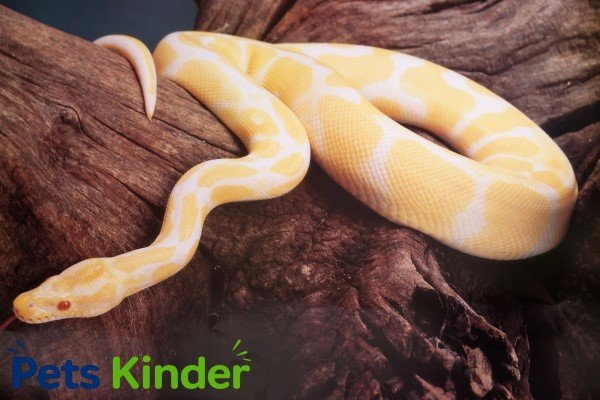
Some reptiles are interesting. The albino ball python is breathtaking. There’s genuinely no other way to describe the moment you first see one that creamy white body, those vivid yellow markings, and those pink or red eyes glowing like tiny rubies under the light. It looks like something out of a fantasy novel, not a pet store. But here’s the thing: behind all that striking beauty is a snake that’s actually well-suited for dedicated beginners and seasoned reptile keepers alike. The albino ball python is calm, manageable, and fascinating to care for if you know what you’re doing.
This guide covers everything you need to know, from what makes this morph so visually unique to how to keep one healthy for the next two decades.
What Is an Albino Ball Python?
Understanding the Morph
The albino ball python is not a separate species. It’s a morph a color and pattern variation of the standard ball python (Python regius) produced through selective breeding. Specifically, albinism in ball pythons results from a recessive genetic mutation that eliminates the production of melanin, the pigment responsible for dark coloration. Without melanin, the typical brown and black patterning disappears entirely, leaving behind a palette of white, yellow, and gold, accented by those unmistakable pink or red eyes. This mutation is fully recessive, meaning both parents must carry the gene to produce albino offspring.
First documented in captive breeding programs in the late 1980s, the albino ball python was one of the earliest and most influential morphs ever developed in the reptile hobby. It essentially launched the modern ball python morph market, which today includes hundreds of recognized genetic variations.
Key Physical Characteristics
Size, Build, and Appearance
Albino ball pythons share the same physical build as standard ball pythons. Adults typically reach 3 to 5 feet in length, with females generally growing larger than males. They have a heavy, muscular body relative to their length, a broad triangular head, and heat-sensing pits along their lips that help them detect warm-blooded prey even in total darkness. Their skin has a smooth, slightly iridescent quality that, combined with the albino coloring, makes them genuinely stunning under natural or reptile-specific lighting.
The “Ball” Behavior
The name “ball python” comes from a classic defensive behavior when stressed or threatened, these snakes curl tightly into a ball, tucking their head in the center. This isn’t aggression; it’s a survival mechanism. A well-socialized albino ball python that’s handled regularly from a young age rarely resorts to this behavior, becoming instead a calm and surprisingly docile companion.
Diet and Nutrition
What and How to Feed an Albino Ball Python
Albino ball pythons are strict carnivores, and in captivity, their diet consists almost entirely of appropriately sized rodents. Most keepers feed pre-killed or frozen-thawed mice or rats, which eliminates the risk of injury to the snake from live prey. The prey item should be roughly the same width as the widest part of your snake’s body this guideline ensures proper sizing and reduces the risk of regurgitation.
Feeding Schedule by Age
Younger snakes need to eat more frequently than adults because they’re actively growing. Hatchlings and juveniles typically feed every 5 to 7 days, while adult albino ball pythons do well on a meal every 10 to 14 days. Overfeeding is a genuine concern obesity can lead to liver problems and reproductive complications. After feeding, avoid handling your snake for at least 48 hours to allow proper digestion and prevent regurgitation, which is stressful and potentially harmful to the snake.
Always provide fresh water in a bowl large enough for your snake to soak in if desired. Ball pythons drink regularly and sometimes submerge themselves, particularly during shedding periods.
Health, Care, and Common Issues
Enclosure and Environmental Requirements
Getting the enclosure right is the foundation of good albino ball python care. Adult snakes need a minimum of a 4x2x2 foot enclosure many keepers prefer larger. A secure, well-ventilated enclosure with a solid lid is non-negotiable, as ball pythons are surprisingly good escape artists. Provide at least two hides one on the warm side and one on the cool side so your snake can thermoregulate without feeling exposed.
Temperature and Humidity
Maintain a warm side ambient temperature of 88 to 92°F and a cool side of 76 to 80°F. Ambient temperatures alone aren’t enough belly heat matters, so an under-tank heating element paired with a thermostat is the most reliable setup. Humidity should stay between 60 and 80 percent, which supports healthy shedding. A substrate that retains moisture well like coconut fiber, cypress mulch, or a bioactive mix helps maintain those humidity levels naturally.
Common Health Issues
Incomplete Sheds (Dysecdysis)
This is one of the most frequently encountered problems in albino ball pythons, and low humidity is almost always the culprit. When the environment is too dry, the shed skin doesn’t come off cleanly in one piece. Retained shed around the eyes the “eye caps” is particularly dangerous and can impair vision or cause infection if left unaddressed. A humid hide filled with damp moss during shedding season goes a long way in preventing this issue.
Respiratory Infections
Respiratory infections typically result from enclosures that are too cold, too damp, or improperly ventilated. Symptoms include wheezing, clicking sounds when breathing, mucus around the mouth or nostrils, and lethargy. These infections require veterinary treatment usually antibiotics and you’ll need to reassess and correct the environmental conditions that allowed the infection to develop.
Mites and Parasites
External parasites, particularly snake mites, are a real concern for any captive reptile. Mites appear as tiny moving dots often black or red around the eyes, under scales, and in the water bowl. They spread quickly and cause significant stress to the snake. Treating the animal and the entire enclosure simultaneously is essential. A reptile-experienced vet can guide you through the safest treatment protocol.
Inclusion Body Disease (IBD)
IBD is a serious and unfortunately incurable viral disease that affects ball pythons and other boids. It causes progressive neurological symptoms, including an inability to right itself when flipped, star-gazing (the snake holding its head back at an unusual angle), and general disorientation. Any snake showing these symptoms should be isolated immediately and evaluated by a reptile vet. Strict quarantine of all new animals before introducing them to an existing collection is the most effective prevention strategy.
Celebrity Connections
The albino ball python and ball pythons broadly have made notable appearances in celebrity culture over the years, adding a layer of mainstream intrigue to an already fascinating animal. Pop icon Britney Spears famously performed with a large snake draped over her shoulders at the 2001 MTV Video Music Awards, a moment that became one of the most talked-about in awards show history and sparked widespread fascination with large pet snakes. Rapper and entrepreneur Flavor Flav has openly discussed his love of exotic reptiles, including ball pythons. Nicolas Cage, known for his unconventional tastes, famously kept exotic snakes as pets during the height of his Hollywood career. Beyond individual celebrities, ball pythons and the albino morph specifically have appeared in music videos, film sets, and fashion shoots, drawn in by their visual drama and manageable temperament. These pop culture moments have genuinely influenced public interest in the hobby, introducing countless people to the idea that a snake can be a legitimate, rewarding companion animal.
Lifespan and Long-Term Considerations
A Snake Built for the Long Run
One of the most important things to understand before acquiring an albino ball python is just how long these animals live. In captivity, with proper care, ball pythons routinely reach 20 to 30 years of age. Some well-cared-for individuals have surpassed that milestone. This is not a short-term commitment it’s a relationship that can span a significant portion of your adult life.
Long-Term Care Planning
As your albino ball python ages, its feeding schedule may naturally slow, and it may become less active overall. Older snakes can develop conditions like kidney disease, reproductive complications in females, and joint or muscle issues. Annual wellness exams with a reptile-experienced veterinarian become increasingly important as your snake moves into its senior years. Finding a qualified reptile vet before you actually need one not after a health crisis begins is advice every keeper should take seriously.
The financial investment also deserves honest consideration. Quality enclosures, heating equipment, thermostats, UVB lighting, and regular feeding add up meaningfully over decades. Going in with a realistic budget protects both you and your animal.
Is the Albino Ball Python Right for You?
If you’re looking for a reptile that combines visual drama with a genuinely manageable temperament, the albino ball python is one of the best choices in the hobby. It’s stunning, it’s calm, and it rewards attentive, consistent care with years of fascinating interaction. It’s not a snake you pick up and put down on a whim it’s one you invest in, learn from, and grow alongside. For the keeper willing to do it right, few reptiles offer quite the same experience.