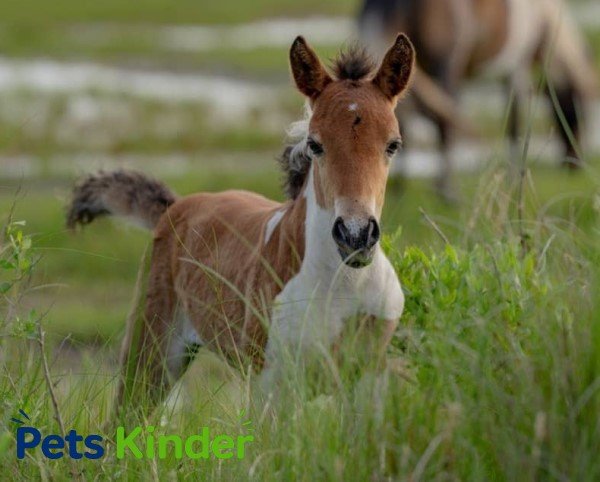
There’s a moment, usually somewhere between watching a newborn foal struggle to its feet within minutes of birth and seeing it break into a wobbly gallop an hour later, when most people fall completely in love with baby horses. They’re gangly, curious, ridiculously long-legged, and absolutely magnetic. But beyond the obvious charm, there’s a surprising amount that even horse enthusiasts get wrong starting with something as basic as what to actually call one.
What Do You Call a Baby Horse?
This question comes up more often than you’d think, and the answer is more layered than most people expect. So, what do you call a baby horse? The standard term is a foal, and it applies to any young horse regardless of sex, typically from birth up to one year of age. Simple enough but it doesn’t stop there.
Once a foal reaches its first birthday, the terminology shifts. A young horse between one and two years old becomes a yearling. After two years, the terms branch depending on sex and, in some contexts, whether the horse is involved in racing. Understanding these distinctions matters, especially if you’re working with breeders, veterinarians, or anyone in the equine industry who uses precise language as a matter of course.
So What Is a Baby Horse Called Beyond “Foal”?
When people ask what a baby horse called is in a more specific sense, they’re often looking for the age-based terminology that experienced horse people use naturally. A foal nursing from its mother is also called a suckling. Once it’s weaned typically between four and six months it becomes a weanling. These terms aren’t interchangeable, and using the right one signals a genuine understanding of equine development stages.
What Is a Male Baby Horse Called?
Here’s where it gets particularly interesting for newcomers. What is a male baby horse called? A young male horse is called a colt. This term applies from birth through age three, sometimes four in racing contexts. Colts are generally more spirited and harder to handle than their female counterparts, driven largely by rising testosterone levels as they mature.
Once a colt reaches sexual maturity and isn’t gelded (castrated), he becomes a stallion. If he’s castrated, he becomes a gelding typically a calmer, more manageable animal and the most common type of riding horse for everyday use. Many owners and trainers geld young males early specifically because it makes the training process significantly smoother and the horse safer around other animals and people.
What Is a Female Baby Horse Called?
Equally important what is a female baby horse called? A young female horse is called a filly. Like the colt, the filly designation applies from birth through approximately age three or four. Fillies are often described as more emotionally sensitive than colts, though individual temperament varies enormously by breed and handling.
When a filly matures fully, she becomes a mare. Mares that have been bred and given birth are sometimes called broodmares, particularly in breeding operations where their reproductive history carries significant value. Understanding the filly-to-mare progression is especially important for anyone involved in breeding programs or competitive equestrian sports.
Is a Pony a Baby Horse? Let’s Clear This Up Once and For All
Few misconceptions in the horse world are more persistent than this one. Is a pony a baby horse? Absolutely not and the distinction matters more than most people realize. A pony is an entirely separate category of equine, defined primarily by height. Any horse measuring 14.2 hands (about 58 inches) or under at the withers is classified as a pony, regardless of age.
Ponies are not underdeveloped horses. They’re distinct breeds Shetland, Welsh, Connemara, Hackney, and others with their own breed standards, temperaments, and characteristics. In fact, many ponies are sturdier pound-for-pound than full-sized horses and are well-known for outliving them by years. A Shetland pony and a Thoroughbred foal might look similar in size for a brief window, but they’re heading in completely different developmental directions.
Characteristics of a Baby Horse
A newborn foal is one of nature’s more dramatic engineering achievements. Within roughly one to two hours of birth, most foals stand, nurse, and begin moving a survival instinct hardwired from thousands of years of evolution in open environments with predators. Their legs at birth appear almost comically long relative to their body, which is intentional those legs are nearly full adult length from day one, enabling fast movement almost immediately.
Foals are born with a fine, fuzzy coat that gradually transitions to their adult coat over the first year. Their hooves are soft at birth, covered in a rubbery material called the deciduous hoof capsule (informally called “golden slippers”) that protects the mare’s birth canal during delivery and hardens within hours of hitting the ground.
Diet and Nutrition From Birth Through Weaning
The first nutrition a foal receives is colostrum the thick, antibody-rich first milk produced by the mare in the hours immediately following birth. This window is critical. Foals absorb these maternal antibodies most effectively within the first 12 to 24 hours of life, and failure to receive adequate colostrum leaves them dangerously vulnerable to infection.
After the colostrum phase, foals nurse frequently throughout the day. By two to three weeks, most foals begin nibbling at hay and grain, mimicking their mothers. This early interest in solid food accelerates quickly, and by four to six months most foals are nutritionally ready for weaning. Post-weaning, a balanced diet of quality forage, appropriate grain formulations for growing horses, and free-choice mineral access supports healthy skeletal and muscular development through the critical early years.
Health, Care, and Common Issues in Young Horses
The First 24 Hours Are Everything
Veterinarians often say that the first day of a foal’s life carries more health risk than any other single period. Failure of passive transfer (insufficient antibody absorption from colostrum), dummy foal syndrome (neonatal maladjustment), and limb deformities are among the most urgent concerns in the immediate newborn stage. A veterinary check within 12 to 24 hours of birth is standard practice on well-managed farms.
Common Health Concerns as Foals Grow
Respiratory infections, joint ill (septic arthritis from bacterial infection entering through the navel), and rotavirus-related diarrhea are significant health risks in the first weeks and months. Naval dipping with iodine immediately after birth reduces infection risk considerably. A structured vaccination program beginning around four to six months depending on the veterinarian’s recommendation protects against tetanus, Eastern and Western equine encephalitis, West Nile virus, and influenza.
Lifespan and Long-Term Development
Horses generally live between 25 and 30 years with proper care, though many well-managed horses comfortably reach their mid-thirties. The early years shape everything that follows — nutrition, handling, socialization, and hoof care during the foal and yearling stages directly influence the horse’s physical soundness and temperament as an adult. Early positive handling, known as imprint training, teaches foals to accept human touch without fear, creating a foundation that makes all future training dramatically easier.
A Famous Voice for Horses
Equine welfare and the wonder of horses have attracted passionate advocates from across public life. Author and horse enthusiast Monty Roberts, widely known as the “Horse Whisperer,” has dedicated his life to demonstrating that horses respond far better to communication and trust than to force. His approach to starting young horses including foals has transformed how trainers worldwide think about the earliest interactions with a baby horse and the lifelong impact those moments carry.
The Bottom Line on Baby Horses
From understanding what do you call a baby horse to distinguishing a filly from a colt, a weanling from a yearling, and definitively settling that a pony is not a baby horse the terminology and care surrounding young equines is richer and more specific than most outsiders realize. A baby horse is not just an adorable subject for viral videos. It’s a complex, fast-developing animal whose early experiences, nutrition, and health management shape every year that follows. Get those early stages right, and you’re building the foundation for decades of partnership.