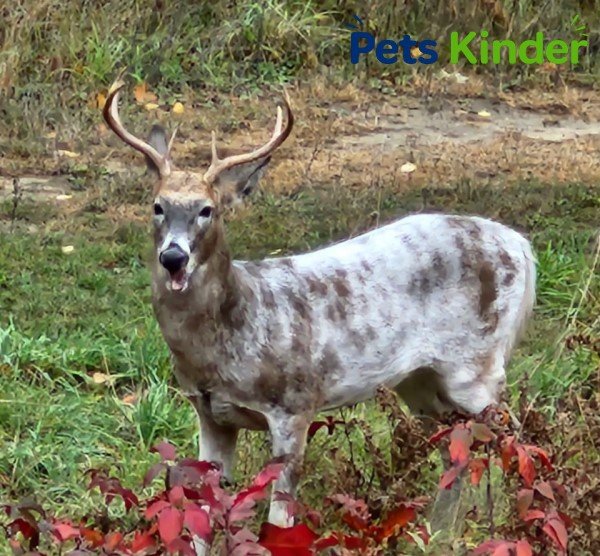
There’s a moment every hunter and wildlife enthusiast dreams about standing in the woods, completely still, when something moves through the tree line that stops you cold. Not because of its size, but because of its color. A deer with a patchwork of white and brown, almost painted-looking, stepping cautiously into the open. That’s a piebald deer, and once you’ve seen one, you never forget it.
These animals are genuinely extraordinary. But beyond the visual spectacle, there’s a deeper, more complicated story about genetics, survival, and what it actually means for a deer to be born this way.
What Is a Piebald Deer?
So, what is a piebald deer, exactly? Simply put, it’s a white-tailed deer that carries a genetic mutation causing irregular patches of white alongside its normal brown coat. The term “piebald” itself comes from the combination of “pie” (as in magpie, the black-and-white bird) and “bald,” an old English word meaning white patch. The result is a deer that looks like it was designed by a paint brush rather than by nature’s usual blueprint.
Unlike albino deer, which lack all pigmentation and display a fully white coat with pink eyes and nose, piebald deer retain partial pigmentation. Their eyes are typically dark and normal, and the white patches appear in irregular, unpredictable patterns across the body. No two piebald deer look exactly alike. Some carry just a few white splotches on the face or rump, while others display nearly full-body white coverage with only small patches of brown remaining.
The condition results from a recessive gene. Both parents must carry and pass on this gene for a fawn to express the piebald trait. This inheritance pattern is a key reason why these animals remain so uncommon in wild deer populations.
How Rare Are Piebald Deer?
If you’ve ever wondered how rare are piebald deer, the numbers are genuinely humbling. Biologists and wildlife researchers estimate that piebald deer make up somewhere between 1% and 2% of the entire white-tailed deer population. Some estimates put the figure even lower, closer to 1 in 1,000 deer, depending on the geographic region and local herd genetics.
Rare piebald deer sightings generate significant buzz in hunting communities and wildlife photography circles for good reason. The odds of encountering one in the field, let alone getting a clean photo or a shot, are remarkably slim. In areas where hunters consistently practice selective harvesting and protect deer with unusual genetics, piebald sightings tend to increase slightly over generations but they remain a genuine rarity by any measure.
It’s also worth noting that piebald deer face significant survival disadvantages compared to their typically-colored counterparts. Their irregular coloring disrupts the natural camouflage that standard brown coats provide, making them more visible to predators like coyotes, bobcats, and mountain lions. This visibility issue often shortens their survival window, which is part of why large, healthy piebald deer are especially rare to encounter.
Key Physical Characteristics
Coat Pattern and Appearance
The most defining feature is, of course, the coat. Piebald coloring appears in an enormous range of patterns. Some deer show only minor white on the belly or face easy to mistake for normal variation at first glance. Others display dramatic, bold patches that cover the neck, shoulders, back, or flanks. The patches are crisp-edged and clearly distinct from the surrounding brown coat, unlike simple bleaching or sun-fading.
Interestingly, the degree of white coverage doesn’t follow any predictable rule. A heavily piebald parent may produce a fawn with only minor markings, and vice versa. The genetic expression is variable, which adds another layer of unpredictability to the trait.
Physical Deformities Often Associated with Piebalding
Here’s where the story gets more complicated. Piebalding in deer isn’t just a cosmetic variation it frequently comes packaged with a range of physical abnormalities. These can include bowed legs, shortened lower jaw (sometimes called “Roman nose”), curved spine (scoliosis), internal organ irregularities, and shortened legs. Not every piebald deer displays all these issues, and some appear outwardly healthy despite the genetic mutation. However, the more extensive the white coverage, the more likely the animal is to carry additional physical challenges.
This association between color mutation and physical deformity is a well-documented phenomenon across multiple species, not just deer. It stems from how the same genes influencing coat pigmentation also interact with developmental pathways during fetal growth. The result is that piebald deer often face not just visibility disadvantages, but structural ones as well.
Diet and Nutrition
What Do Piebald Deer Eat?
Piebald deer follow the same dietary patterns as all white-tailed deer they are herbivores and highly adaptable foragers. Their diet shifts with the seasons in a practical and efficient way. During spring and summer, they focus on lush green growth: clover, grasses, alfalfa, leafy browse, and agricultural crops where available. As fall arrives, their diet transitions toward acorns, beechnuts, and other hard mast, which provide essential fat reserves for winter.
In winter, when food is scarce, white-tailed deer piebald or otherwise rely heavily on woody browse: twigs, bark, and dried plant material. Their digestive system handles this rough forage effectively, though nutritional stress during harsh winters remains a real threat, particularly for animals that are already physically compromised.
Nutritional Vulnerability in Piebald Deer
Because many piebald deer carry physical deformities, their ability to forage efficiently can be reduced. A deer with a shortened jaw or malformed legs may struggle to compete with healthy herd members at food sources. During periods of nutritional stress particularly late winter and early spring these vulnerabilities compound. Wildlife managers and land stewards who observe piebald deer on their properties sometimes supplement food sources during lean months, which can meaningfully support these animals’ survival odds.
Health, Care, and Common Issues
Genetic and Physical Health Challenges
The genetic mutation responsible for piebalding introduces a cascade of potential health concerns. Beyond the visible physical deformities already described, piebald deer may experience compromised immune function, making them more susceptible to common deer diseases. Chronic Wasting Disease (CWD), epizootic hemorrhagic disease (EHD), and internal parasites affect the broader deer population, but animals already weakened by structural or immune abnormalities face greater risk from these threats.
Respiratory issues have also been observed in some piebald deer, potentially connected to skeletal deformities that affect chest cavity development. Shortened or curved spines can restrict lung capacity over time, which limits the animal’s ability to sustain exertion during flight from predators a serious survival disadvantage in the wild.
Predation and Survival Pressure
Survival is arguably the most pressing health concern for piebald deer. Their disrupted camouflage makes them targets from birth. Fawns, which rely almost entirely on staying hidden and still during their first weeks of life, are particularly vulnerable when their coat is irregular and bright. Studies on unusual-colored deer consistently show lower survival rates compared to normally colored animals, largely due to increased predation pressure in the critical early months.
Despite these challenges, some piebald deer do reach maturity and live reasonably full lives. Those that survive their first year gain experience, develop escape instincts, and can live for several years occasionally even longer in areas with low predator pressure and abundant food.
Lifespan and Long-Term Considerations
How Long Do Piebald Deer Live?
In the wild, white-tailed deer typically live between 4 and 6 years, though some individuals reach 10 or more years in low-pressure environments. Piebald deer generally fall on the shorter end of this range due to their compounding disadvantages. The combination of reduced camouflage, potential physical deformities, and elevated disease susceptibility creates a shorter average lifespan compared to healthy, normally-colored deer.
In protected environments wildlife sanctuaries, private preserves with no hunting, or areas with minimal natural predators piebald deer have been documented living into their mid-teens. These cases are exceptional, but they demonstrate that with the right conditions, these animals are capable of long lives.
Conservation and Ethical Considerations
Many states have laws protecting piebald deer from hunting, similar to protections extended to albino deer. The reasoning is partly ethical and partly ecological these animals represent a visible expression of rare genetics, and their presence in a herd adds biodiversity value. Even from a purely practical standpoint, allowing piebald deer to survive and reproduce increases the chance of the recessive gene persisting in local populations.
For wildlife enthusiasts, photographers, and hunters alike, encountering a piebald deer remains one of the most memorable experiences the natural world can offer. They are living proof that nature doesn’t always follow the rulebook and that sometimes, the most extraordinary things are hiding just beyond the tree line.