The Ostrich: Earth’s Most Extraordinary Flightless Bird and Why It Defies Every Expectation

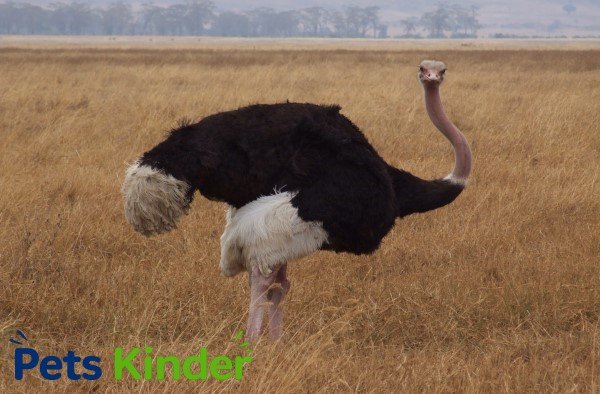
When most people think of birds, they picture something that flies. The ostrich shatters that assumption completely and then some. This ancient, towering creature is simultaneously the world’s largest bird, the fastest two-legged animal on earth, and the producer of the biggest eggs of any living species. The ostrich is, in almost every measurable way, a bird built on superlatives. And yet, most people know surprisingly little about what makes it truly remarkable.
Is the Ostrich a Bird? Understanding Its Classification
Yes the ostrich is absolutely a bird, though it’s easy to see why some might question that. Scientifically known as Struthio camelus, the ostrich belongs to a group of flightless birds called ratites, which also includes emus, rheas, kiwis, and cassowaries. Despite being unable to fly, ostriches share all the defining biological characteristics of birds: feathers, a beak, warm blood, and the ability to lay eggs.
The ostrich is the sole surviving species of the family Struthionidae, making it genuinely one of a kind within the avian world. Its evolutionary lineage stretches back over 60 million years, which means this bird has been walking the earth since not long after the dinosaurs disappeared. That kind of staying power is a testament to just how well-adapted the ostrich truly is.
Physical Characteristics That Set the Ostrich Apart
The ostrich is impossible to confuse with any other creature. Adult males stand between 6 and 9 feet tall and weigh anywhere from 220 to 290 pounds sometimes more. Females are somewhat smaller but still impressively large by any standard. Their long, powerful necks account for a significant portion of their height and give them excellent visibility across open terrain.
Their feathers are soft and loosely structured, lacking the interlocking barbs found in flying birds. This gives ostriches a fluffy, almost disheveled appearance. Males display striking black-and-white plumage used during courtship displays, while females wear dull brown coloring that provides natural camouflage. Their large, expressive eyes the biggest of any land animal measure about 2 inches in diameter, allowing outstanding long-distance vision.
Perhaps their most unusual physical feature is their feet. Unlike most birds, which have three or four toes, ostriches have only two. The inner toe carries a large, dangerous claw capable of delivering a kick powerful enough to kill a lion. It is, quite simply, one of nature’s most effective defensive weapons.
Can an Ostrich Fly? The Truth Behind the Wingless Wonder
So can an ostrich fly? The short answer is no, and it never will. Ostriches lack the keeled sternum (breastbone) that flying birds use to anchor their flight muscles. Their wings, while still present, are too small and underdeveloped to generate any meaningful lift for a body that large. Evolution essentially traded flight for something arguably more impressive: raw terrestrial speed and endurance.
But those wings aren’t completely useless. Ostriches use them for balance while running, for steering during quick direction changes, and as part of elaborate courtship displays. In cold weather, the wings help regulate body temperature, and mothers spread their wings protectively over their chicks. So while the ostrich gave up the sky, it found plenty of other uses for what remained.
How Fast Can an Ostrich Run? The Answer Is Astonishing
If you’ve ever wondered how fast an ostrich can run, the answer will genuinely surprise you. Ostriches can reach speeds of up to 45 miles per hour in short bursts, making them the fastest running birds on earth. More impressively, they can sustain speeds of around 30 miles per hour for extended distances sometimes covering over 30 miles in a single hour at a consistent pace.
Their long, muscular legs act like biological springs, with each stride covering 10 to 16 feet. The two-toed foot design reduces contact friction and maximizes forward propulsion with each step. This speed isn’t just about escaping predators it’s a complete survival strategy. Rather than hiding or flying away, the ostrich simply outruns whatever is chasing it. And if running fails, that powerful kick delivers a serious backup plan.
What Is the Size of an Ostrich Egg?
Few things in the natural world are as visually striking as an ostrich egg. To answer the question directly: what is the size of an ostrich egg? On average, an ostrich egg measures about 6 inches long, 5 inches wide, and weighs between 3 and 5 pounds roughly equivalent to 24 chicken eggs in volume. The shell is thick, creamy-white, and exceptionally durable, capable of supporting the weight of an adult human without cracking.
Despite being the largest egg of any living bird by absolute size, it’s actually the smallest egg relative to the mother’s body weight in the entire bird kingdom. Ostriches incubate their eggs communally, with the dominant female and the male taking turns sitting on the nest. Males handle the night shift their dark plumage provides better camouflage in the dark while females cover the daytime hours. Chicks hatch after about 42 days and are immediately capable of walking and following the herd.
Diet and Nutrition
What Does the Ostrich Eat?
Ostriches are omnivores, though plant material makes up the vast majority of their diet. In the wild, they consume roots, leaves, seeds, flowers, and grasses, supplementing occasionally with insects, small lizards, and whatever other protein sources become available. They are highly opportunistic feeders and adapt their diet to whatever the environment offers seasonally.
One of the most fascinating aspects of ostrich nutrition is how they digest food without teeth. They swallow small stones and pebbles sometimes quite large ones which collect in their gizzard and grind food mechanically. An adult ostrich can carry over 2 pounds of stones in its digestive system at any given time. They also have a remarkable ability to go without water for extended periods, obtaining much of their hydration directly from the vegetation they consume.
In farmed settings, ostriches are fed a carefully balanced diet of commercial ratite pellets, leafy greens, and grains. Calcium and mineral supplementation is essential, particularly for breeding females who need reserves for egg production.
Health, Care, and Common Diseases
Health Challenges in Wild Ostriches
Wild ostriches are generally hardy animals, but they face threats from parasites, bacterial infections, and injuries sustained during territorial fights or predator encounters. Their immune systems are well-developed, and their size alone deters most natural threats.
Newcastle Disease
One of the most serious diseases affecting ostriches in both wild and farmed populations is Newcastle disease, a highly contagious viral infection that attacks the respiratory, nervous, and digestive systems. Outbreaks can decimate entire flocks rapidly, and vaccination programs are a cornerstone of commercial ostrich farming.
Parasitic Infections
Internal parasites particularly nematodes and tapeworms are common in ostriches that graze in contaminated pastures. Regular deworming protocols and proper pasture management are essential for farmed ostriches. External parasites like mites and ticks also affect skin and feather quality significantly.
Proventricular Impaction
This is one of the most common and dangerous digestive disorders in captive ostriches. It occurs when foreign objects, sand, or inappropriate feed accumulate in the proventriculus (the first stomach chamber), causing a blockage that can be fatal without surgical intervention. Proper enclosure design and feeding management dramatically reduce the risk.
Leg and Joint Problems
Given their size and weight, ostriches are prone to leg injuries and joint stress, particularly in farmed environments with hard or uneven flooring. Young chicks are especially vulnerable to developmental leg deformities if their nutrition or housing conditions are suboptimal during growth phases.
Lifespan and Long-Term Considerations
How Long Do Ostriches Live?
Ostriches are genuinely long-lived animals. In the wild, they typically live between 30 and 40 years. In captivity, with proper care and veterinary attention, they can reach 50 years or more a remarkable lifespan for a bird of any kind.
For ostrich farmers and exotic animal keepers, this longevity demands serious long-term planning. These birds require substantial space a minimum of several acres per bird along with consistent veterinary oversight, species-appropriate nutrition, and social companionship, since ostriches are inherently social animals that suffer behavioral problems when kept in isolation.
Commercially, ostriches are farmed across Africa, Australia, North America, and Europe for their meat, leather, feathers, and eggs. Ostrich meat is notably lean, high in protein, and low in fat and cholesterol nutritional qualities that have driven growing global demand.
The Ostrich in Perspective
The ostrich stands as one of nature’s most compelling success stories. It gave up flight millions of years ago and, in doing so, became something far more specialized: a land animal of extraordinary speed, resilience, and adaptability. From its record-breaking eggs to its lethal kick and its unmatched running endurance, every aspect of the ostrich reflects millions of years of fine-tuned evolution.
Understanding and respecting this bird whether you encounter it on a safari, a farm, or in a wildlife documentary means recognizing it for what it truly is: not a failed flier, but a perfectly engineered survivor.