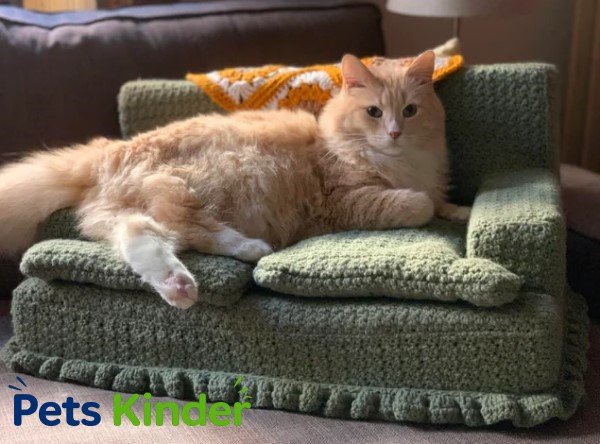
Let’s be real. The moment you brought a cat home, the couch stopped being yours. It became a scratching post, a napping pad, a vantage point, and a shedding station all rolled into one piece of furniture you paid good money for. If you’ve been finding claw marks along the armrest or a permanent layer of fur on the cushions, you’re not alone. Millions of cat owners deal with exactly the same battle every single day.
The good news? You don’t have to choose between your cat and your couch. With the right cat couch setup whether that means protecting what you have, covering it smartly, or giving your cat their own dedicated space you can have both. This guide covers everything you need to know.
Why Cats and Couches Are Such a Problematic Combination
Before jumping into solutions, it helps to understand why cats are so drawn to couches in the first place. It’s not spite. It’s instinct.
The Scratching Instinct Is Deeply Hardwired
Cats scratch to shed the outer layer of their claws, stretch their muscles, and mark territory through the scent glands in their paws. A couch with its wide, textured surface, stable structure, and central location in the home is basically a perfect scratching target from a cat’s perspective. No amount of scolding will override millions of years of evolutionary programming. That’s why redirection and physical protection are far more effective strategies than punishment.
Cats Claim Soft, Elevated Surfaces as Territory
Beyond scratching, cats are drawn to couches because they’re soft, warm, and often located in the social center of the home. Cats want to be where the action is, even when they’re pretending to ignore you. A couch placed near a window or in a busy living room checks every box a cat looks for in a resting spot comfort, warmth, and a clear sightline to the room.
The Cat Couch Protector: Your First Line of Defense
If protecting your existing furniture is the priority, a cat couch protector is the most direct solution available. These products come in several forms, and choosing the right one depends on your cat’s specific habits and your couch’s material.
Scratch Guards and Panel Protectors
Scratch guards are typically made from clear or semi-transparent plastic, vinyl, or thick PVC. You apply them directly to the areas your cat targets most usually the corners, armrests, and the lower front panels of the sofa. A good cat couch protector in this category is nearly invisible once installed, doesn’t alter the appearance of your furniture dramatically, and creates a slick surface that cats find unsatisfying to scratch.
Look for protectors with strong adhesive backing or pin-mounting systems that won’t damage upholstery. Some versions include double-sided tape along the edges, which adds a mild deterrent cats dislike the sticky sensation on their paws. Over time, many cats simply stop targeting the protected areas and redirect to more appropriate surfaces.
Furniture Deterrent Sprays
Sprays are another form of cat couch protector. These products use scents that cats find unpleasant typically citrus, eucalyptus, or bitter apple to discourage repeated scratching or lounging on specific spots. They’re best used in combination with physical barriers rather than as a standalone solution. Reapplication is usually necessary every few days, and results vary depending on the individual cat.
Cat Couch Cover: Protecting the Whole Surface, Not Just the Corners
While scratch guards target specific zones, a cat couch cover takes a broader approach. It drapes over the entire sofa or at least the seating area creating a washable barrier between your cat and the upholstery beneath.
What to Look for in a Quality Cat Couch Cover
The best cat couch cover options share a few key features. First, the fabric should be tightly woven and scratch-resistant microfiber, canvas, and certain polyester blends work well because cat claws are less likely to snag or pull threads. Second, the cover needs to stay in place. Loose, shifting covers frustrate both owners and cats, and a cover that bunches up every time your cat jumps on the couch becomes more of a hassle than a solution.
Non-slip backing, elastic straps around cushions, and anchoring tucks beneath the sofa frame all help keep the cover stable. Additionally, a waterproof lining adds extra protection if your cat has a habit of drooling while sleeping or if accidents happen.
The Style Factor You Shouldn’t Ignore
Functionality matters, but so does aesthetics. A cat couch cover doesn’t have to look like you’ve thrown a drop cloth over your sofa. Today’s market offers covers in hundreds of colors, patterns, and textures that can genuinely complement your living room decor. Some are designed to mimic the appearance of the upholstery beneath, making them almost undetectable to guests. Others lean into the “pet owner” aesthetic with fun patterns or neutral tones that pair easily with most home styles.
Cat Couch Bed: Giving Your Cat Their Own Space on the Sofa
Here’s a strategy that many cat owners overlook entirely: instead of just blocking your cat from the couch, give them a designated spot on it. A cat couch bed is a compact, cushioned insert that attaches to or sits on the sofa, creating a defined zone that’s clearly “theirs.”
Why a Dedicated Cat Couch Bed Actually Works
Cats are territorial creatures. When you designate a specific section of the sofa as their space and make it genuinely appealing many cats gravitate toward that spot rather than sprawling across the entire couch. A well-placed cat couch bed with familiar scent, soft texture, and a slightly raised or bolstered design mimics the kind of snug, sheltered sleeping spots cats seek out instinctively.
Features That Make a Cat Couch Bed Worth It
Material and Comfort
Plush fleece, sherpa, and memory foam options are all popular. Cats tend to gravitate toward materials that retain warmth, so thicker, denser fills generally see more use than thin, flat pads. Bolstered edges are a particularly effective design element cats love pressing against a firm edge while they sleep, which is why bolstered beds consistently outsell flat mat-style options.
Ease of Cleaning
Cat hair accumulates fast. Any cat couch bed worth buying should have a removable, machine-washable cover. Beds that require hand washing or dry cleaning quickly become a burden, and neglecting to wash them regularly leads to allergen buildup and odor neither of which is good for your cat or your home.
Attachment and Stability
Some cat couch beds include straps or clips that anchor them to sofa cushions or armrests. This prevents the bed from slipping when your cat jumps onto it, which matters especially for older cats or those recovering from injury. A bed that slides or tips discourages use faster than almost anything else.
Health and Care Considerations for Couch-Loving Cats
The connection between your cat’s couch habits and their overall health is more significant than most people realize. How a cat uses furniture can actually tell you quite a bit about how they’re feeling physically and mentally.
Watch for Changes in Resting Patterns
A cat that suddenly starts sleeping on the couch more than usual or in unusual positions may be experiencing joint discomfort. Cats are experts at hiding pain, but changes in resting location and posture often signal early-stage arthritis or muscle soreness. If your cat seems reluctant to jump up or down from the couch, a veterinary checkup is worth scheduling.
Scratching Can Indicate Stress
Increased scratching behavior especially on new or unexpected surfaces is sometimes a sign of stress or anxiety. Environmental changes, new pets, altered routines, or even rearranged furniture can trigger stress responses in cats that manifest as destructive scratching. Addressing the root cause is always more effective than just adding more physical barriers.
Hygiene and Allergen Management
Cat dander and saliva are the primary triggers for human cat allergies, and both accumulate heavily on couches. Regular washing of any cat couch cover or cat couch bed is essential for managing allergens in the home. Vacuuming the sofa itself including beneath cushions at least once a week reduces buildup significantly. For households with allergy-sensitive members, HEPA-filter vacuums make a meaningful difference.
Long-Term Thinking: Your Couch and Your Cat, Year After Year
Cats live long lives typically 12 to 18 years for indoor cats, with many reaching their mid-twenties under exceptional care. That means the relationship between your cat and your furniture is genuinely a long-term one. The strategies you put in place now will shape habits that persist for years.
Investing in durable, washable cat couch covers and well-made scratch protectors pays off over time. Replacing budget options every six months costs more in both money and frustration than buying quality products once. Similarly, a comfortable, properly sized cat couch bed introduced early becomes a deeply ingrained habit. Cats that bond with a specific sleeping spot tend to use it reliably, which means less hair and fewer claw marks on the rest of the sofa.
The goal isn’t to ban your cat from the couch that’s a losing battle. The goal is to manage the relationship intelligently, protect what matters, and create a space where both you and your cat can coexist comfortably. With the right tools in place, that’s genuinely achievable.