The Damascus Goat: The Most Fascinating and Controversially Beautiful Farm Animal on the Planet

There are animals that turn heads, and then there are animals that stop people mid-sentence, pull out their phones, and frantically search to confirm what they’re actually looking at. The Damascus goat falls firmly into that second category. With a face so distinctly unusual it has earned the breed a global reputation both as one of the most valuable livestock animals in the Middle East and as one of the most visually striking creatures in the entire animal kingdom the Damascus goat is anything but ordinary.
Whether you’re a farmer, a livestock enthusiast, or simply someone who stumbled across a photo online and couldn’t look away, this breed rewards deeper exploration. There’s far more to the Damascus goat than its remarkable appearance, and understanding this animal fully means looking beyond first impressions.
What Is the Damascus Goat?
Origins and Cultural Significance
The Damascus goat also known by several regional names including the Shami goat, Aleppo goat, Halep goat, and Baladi goat is a breed with ancient roots tracing back to the Levant region of the Middle East. It is believed to have originated in Syria, where the city of Damascus gave it its most widely recognized name. Over centuries, the breed spread throughout Lebanon, Cyprus, Jordan, and other parts of the Arab world, where it remains deeply embedded in agricultural and cultural traditions.
In Syria and across the broader region, owning a high-quality Damascus goat is considered a mark of prestige. These animals are exhibited in livestock beauty competitions yes, goat beauty pageants are very much a real and serious affair in parts of the Middle East where the most prized individuals can command prices equivalent to tens of thousands of dollars. The Damascus goat isn’t just a farm animal in these cultures; it’s a living status symbol.
Why Does It Look That Way?
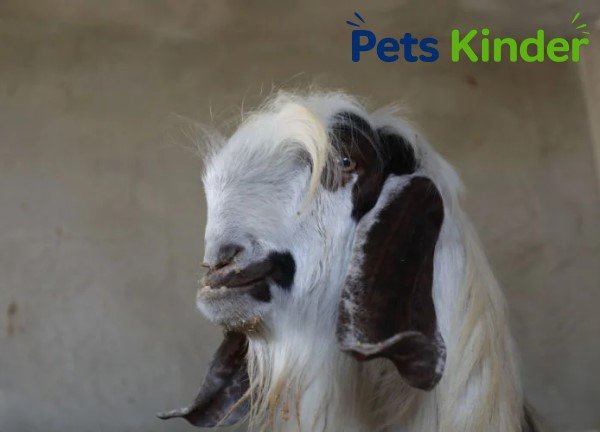
If you’ve seen photos of the Damascus goat, particularly the kids, you know exactly what this section is about. The breed is famous or perhaps infamous for its dramatically curved Roman nose, elongated drooping ears that can reach remarkable lengths, and a distinctive facial profile that many people describe as almost surreal. Adult goats develop a prominent convex nose bridge and a short, rounded muzzle that gives the face an unusual compressed appearance.
Interestingly, baby goat kids of this breed often look dramatically different from the adults. Newborn Damascus kids are frequently described as adorable in a more conventional sense, with large soft eyes and oversized ears and then, as they mature, their facial features shift into the breed’s signature dramatic profile. It’s a transformation that genuinely surprises many first-time observers.
Key Features and Physical Characteristics
Size, Build, and Coat
The Damascus goat is a large, robust breed. Adults stand noticeably taller than most common goat breeds, with a well-muscled frame and a deep, broad chest that signals their dual-purpose role as both milk and meat producers. Their body is long and proportional, supported by strong, sturdy legs well-suited to varied terrain.
Coat color typically ranges from red and brown to fawn and occasionally cream or mixed tones. The hair is short to medium in length, relatively low-maintenance, and lies close to the body. One of the breed’s most visually dramatic physical features beyond the face is its ears. The ears are extraordinarily long, sometimes exceeding 27 to 30 centimeters, and hang in a distinctive pendulous sweep that gives the animal an almost theatrical appearance.
Horns and Overall Presence
Both male and female Damascus goats can carry horns, though many individuals are polled or have horns that curve gently backward. Males, known as bucks, are significantly larger and more heavily built than females. Bucks also carry a more pronounced facial profile that accentuates the breed’s already striking look. Overall, the Damascus goat has a commanding physical presence the kind of animal that owns whatever space it occupies.
Diet and Nutrition
What Damascus Goats Eat
As a breed that evolved in the semi-arid landscapes of the Middle East, the Damascus goat is a naturally efficient forager. Like most goats, it is a browser rather than a grazer, preferring shrubs, leaves, bark, and varied plant matter over flat pasture grass. This foraging behavior makes them surprisingly adaptable to landscapes where other livestock might struggle.
In a managed farm setting, Damascus goats thrive on a base diet of quality hay particularly grass hay or mixed legume hay like alfalfa supplemented with fresh browse when available. Grain supplementation becomes especially important during pregnancy, lactation, and periods of high milk production, as the nutritional demands on does during these phases are considerably elevated.
Key Nutritional Priorities
Calcium and phosphorus balance is critical for this breed, particularly for high-producing milk does. A diet skewed too far in either direction can lead to metabolic issues that affect both bone health and reproductive performance. Fresh, clean water must always be available Damascus goats in full milk production can consume significant quantities daily. Loose mineral supplementation tailored for goats, rather than sheep, is important because goats have higher copper requirements that sheep-formulated minerals don’t adequately meet.
Health, Care, and Common Issues
Hardiness With Some Important Caveats
The Damascus goat is generally considered a hardy, adaptable breed. Centuries of development in a challenging climate have produced an animal with solid natural resilience. That said, like all livestock, they require attentive, proactive care to remain healthy and productive throughout their lives.
Internal Parasites
Barber pole worm the Haemonchus contortus parasite is one of the most significant threats to goat health worldwide, and the Damascus goat is not immune. This bloodsucking internal parasite can cause rapid anemia, bottle jaw, and death if left unmanaged. Regular fecal egg counts and targeted deworming using the FAMACHA method rather than blanket chemical treatments represent the current best practice for sustainable parasite control.
Respiratory Disease
Pneumonia is a leading cause of illness and death in goats of all breeds, including the Damascus. Sudden changes in temperature, poorly ventilated housing, and stress all elevate risk. Keeping shelter dry, well-bedded, and adequately ventilated without drafts significantly reduces respiratory illness. Prompt veterinary attention at the first signs of labored breathing, nasal discharge, or lethargy is essential.
CAE and CL
Caprine Arthritis Encephalitis (CAE) and Caseous Lymphadenitis (CL) are two chronic diseases that affect goat herds globally. Both are manageable through responsible herd biosecurity, careful sourcing of new animals, and in the case of CAE a preventive kid-rearing protocol that separates newborns from infected does before nursing. Testing new animals before introducing them to an established herd is a non-negotiable practice for responsible Damascus goat owners.
Routine Care Essentials
Hoof trimming every six to eight weeks keeps feet healthy and prevents lameness. Vaccination protocols including CDT vaccination for clostridial diseases and tetanus should be established with a veterinarian familiar with small ruminants. Dental checks, especially in older animals, help catch issues before they affect feed intake and body condition.
Damascus Goat Milk and Goat Cheese
A Breed That Produces Exceptional Milk
One of the primary reasons the Damascus goat commands such high regard beyond its appearance is its remarkable milk production. High-quality does produce substantial quantities of rich, creamy milk far exceeding what most other goat breeds in the region can achieve. The milk is high in butterfat and protein, making it exceptionally well-suited for dairy applications.
That milk quality translates directly into outstanding goat cheese. Artisan cheesemakers who work with Damascus goat milk consistently note the depth of flavor and superior creaminess it delivers. Whether used for fresh soft chevre, aged firm varieties, or creamy labneh the strained yogurt cheese beloved across the Middle East Damascus goat milk produces a goat cheese that stands apart in both taste and texture. For small-scale farmers or homesteaders interested in artisan dairy, this breed offers genuine potential that few others can match.
The Baby Goat Factor in Dairy Production
In dairy goat farming, the arrival of a baby goat or ki triggers the doe’s milk production cycle. Damascus goat kids are typically weaned between 6 to 12 weeks of age, depending on whether the operation prioritizes kid growth or early milk harvesting for dairy purposes. Many Damascus goat farmers choose to dam-raise kids for a period before transitioning to bottle or bucket feeding, which also helps socialize the young animals and supports their healthy development during the critical early weeks of life.
Lifespan and Long-Term Considerations
How Long Do Damascus Goats Live?
With proper nutrition, attentive healthcare, and a well-managed environment, Damascus goats typically live between 10 to 15 years. Does that are well cared for remain productive milk producers well into their middle years, with peak production usually occurring between their second and fifth lactations. Bucks used for breeding maintain fertility for a comparable span with good management.
As Damascus goats age, joint health, dental condition, and parasite resilience naturally decline. Senior animals benefit from softer forage options, more frequent health monitoring, and reduced herd competition at the feed bunk. Planning for the long-term care of aging animals is part of responsible ownership these are not disposable livestock but long-lived, intelligent creatures that form genuine bonds with their caretakers.
Is the Damascus Goat Right for Your Farm?
The Damascus goat is not the easiest breed to source outside of the Middle East, and quality breeding stock commands a premium price wherever it’s available. But for serious goat enthusiasts, small-scale dairy farmers, or livestock keepers who want an animal that combines genuine productivity with an utterly unforgettable presence, the Damascus goat delivers on every level. It is, without question, one of the most remarkable farm animals in existence and getting to know this breed properly only deepens that impression.